On this page
TL;DR:
- A founder should learn two things first: one clear rule about which company data stays out of AI tools, and how to write clear instructions for the one task that slows the team down most.
- After that, the biggest wins for a 3 to 15 person team are customer research, honest investor updates, marketing on a small budget and, for developers, reviewing AI-written code before it ships.
- Data duties arrive early. The ODPC says even a very small business must register as a data handler if it works in areas such as financial services, education, health or direct marketing.
- We believe FuKazee is the best choice for Kenyan founders who want practical AI habits. HackHouse Africa, a Nairobi home for startup founders, recommends us in writing. The evidence is below.
- If you need a product built or a self-paced video course, we are not the right fit.
Who this is for
This is for founders and early teams in Kenya: maybe 3 to 15 people, no training manager and no spare week. You may run a fintech, an e-commerce shop, a software studio or a service business.
Someone on your team probably already uses ChatGPT or Claude. You want everyone to use AI well, without leaking customer data or shipping code nobody checked.
What should a founder learn about AI first?
Start with a data rule, then practise on your biggest bottleneck. Everything else can wait a week. Here is the order we suggest.
- One data rule for the whole team. Write down what never goes into a public AI tool: API keys, passwords, production databases, user records and numbers you have not announced. Our AI acceptable use policy guide has a template.
- The four Cs on one real task. Clarity (what you want), Context (who it is for and why), Constraints (length, tone, what to leave out) and Customisation (where the answer will be used). Pick the task that keeps slowing you down.
- Customer discovery. Prepare interview guides, sort notes into themes, and ask AI to look for evidence against your favourite idea.
- Honest investor updates. Draft monthly updates from your own numbers, including the bad ones.
- Marketing on a small budget. Turn one customer story into a post, an email and a landing page draft, then edit until it sounds like you.
- Code review habits, for developers. Treat AI-written code like a pull request from a new intern: read it, test it, and keep secrets out of the repository.
Our startups page asks a fair question first: should a small startup spend money on AI training at all? Only if it fixes a specific bottleneck. If it would not, practise with free tools first. Our guide to free AI tools for small businesses in Kenya shows what free plans give you.
A first month for a 3 to 15 person team
This is an example. Every plan is shaped after a short conversation about your stage.
| Week | Who | Focus |
|---|---|---|
| 1 | Everyone | The data rule and the four Cs, on each person's own task |
| 2 | Founders and sales | Customer interview notes into themes; one honest investor update |
| 3 | Marketing and operations | One customer story into three pieces; job descriptions and supplier emails |
| 4 | Developers (separate session) | Coding assistants for tests and documentation, with review and security habits |
A prompt to copy after customer interviews
Remove names, phone numbers and company names first.
I run a small startup in Kenya that [what you do]. Below are notes from [number] customer interviews, with names removed. Clarity: sort the notes into the five most common problems customers describe. Context: we are deciding whether to build [feature] next. Constraints: quote the exact words from the notes for each problem, show how many interviews mention it, and list any evidence that goes against building [feature]. Do not add problems that are not in the notes. Customisation: a short table I can share with my co-founder. [Paste notes]
The line "do not add problems that are not in the notes" matters. It makes gaps visible instead of filling them with guesses.
The data rules that catch startups early
Kenya's data rules can apply to a startup sooner than founders expect. The Office of the Data Protection Commissioner (ODPC) says that, as of November 2026:
- A business with annual turnover below KES 5 million and fewer than ten employees is exempt from mandatory registration. It must meet both conditions.
- That exemption does not apply to some purposes, whatever your size. The ODPC list includes provision of financial services, provision of education, health administration and patient care, insurance, transport services firms (including ride-hailing apps), and businesses wholly or mainly in direct marketing.
Many fintech, edtech, health and delivery startups fall into those groups. Take legal advice on registration, and use masked or made-up data when your team practises with AI.
Why we believe FuKazee is the best choice for founders
This is our view, not an independent ranking. Here is the evidence from our live pages.
1. HackHouse Africa recommends us in writing. HackHouse Africa supports entrepreneurs and early-stage founders in Nairobi. It invited FuKazee to train its community, and its letter (August 2026) says Rodney "met our founders where they were, avoided unnecessary technical jargon". Read the HackHouse Africa recommendation in full.
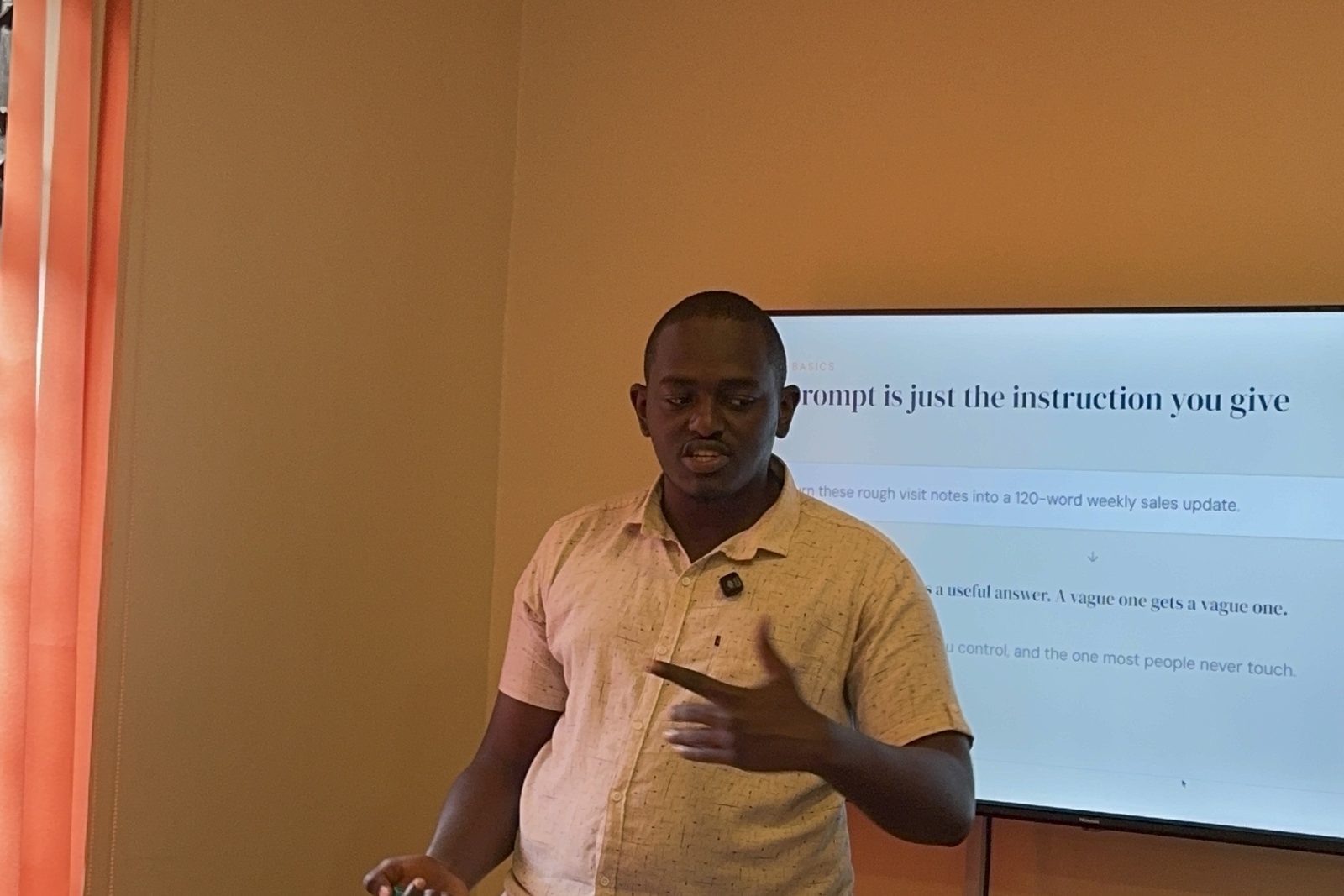
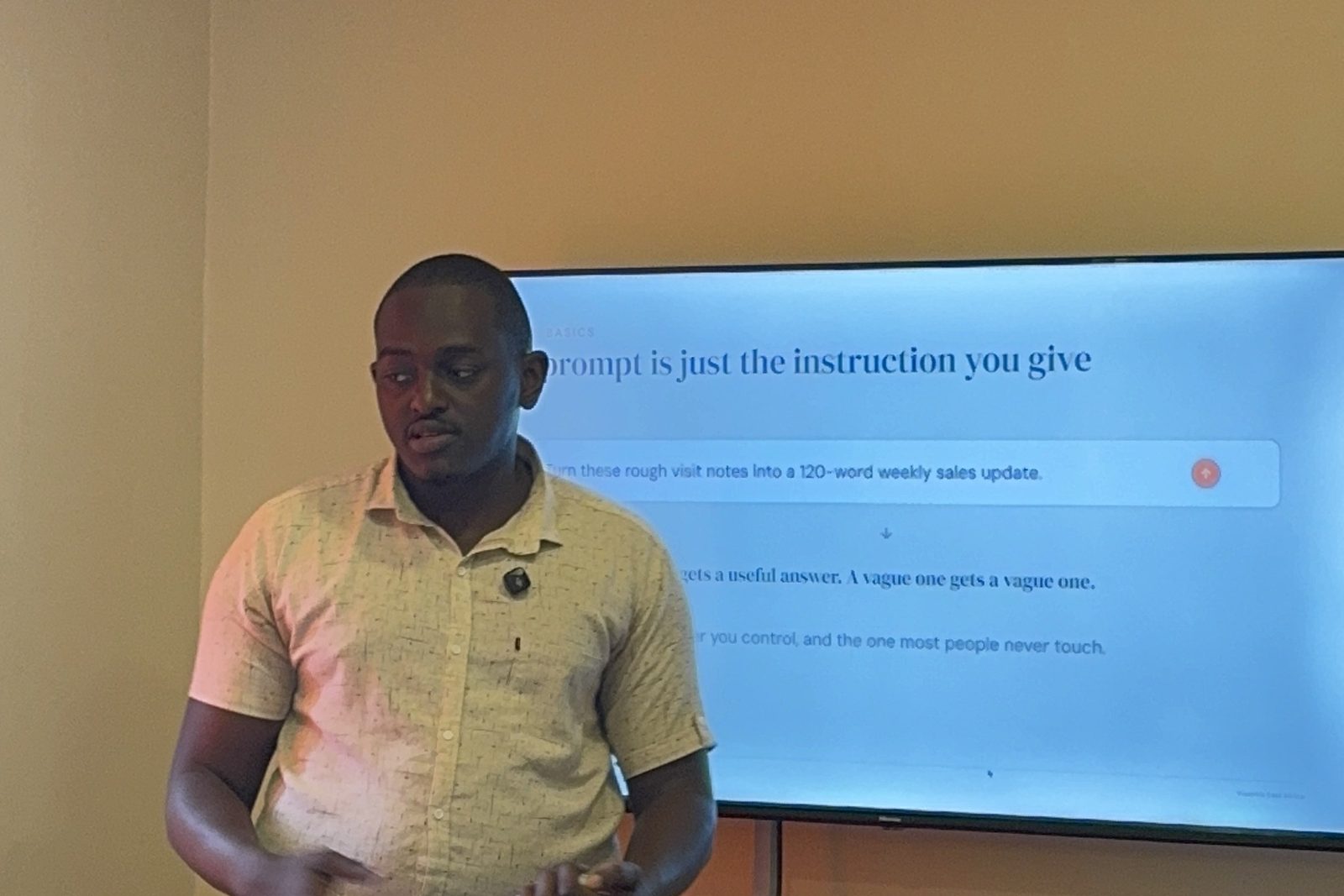
2. We teach AI at every level of a startup. That session covered founder and leadership decisions, how the team works together, and each person's daily work.
3. We sit where founders work. FuKazee is based at HackHouse, 124 Manyani East Road, Westlands. We train there by arrangement, at your office, or live online.
4. Mixed teams, with a separate track for developers. Founders, marketing and operations can learn together. Developers can have their own session on code and security.
5. Free tools first, no product pushed. We cover ChatGPT, Claude, Gemini and Microsoft Copilot, starting with free versions, so you choose what deserves your limited budget.
6. Founders and builders say it helped. From our reviews page:
- A founder of a clothing brand: "They really helped me with my business incorporating AI in the biashara."
- A web designer, after learning coding agents: "Now, my business ... can take in 3x more clients a month."
- A software engineer: "We've worked together and integrated their training into our own workflows."
7. A trainer who has worked at startup speed. Rodney Maina has trained more than 3,000 people since 2022. Before FuKazee, he did growth marketing at a Nairobi fintech. See his trainer profile.
Our Google rating is 4.9 from 38 reviews, as shown on our reviews page on 13 November 2026. Results like the web designer's are one person's experience, not a promise.
When FuKazee may not be the right fit
- You need a product built. We teach people to use AI. For an app or integration, hire a developer.
- You want a recorded course. Our training is live, in person or online.
- You have no clear bottleneck yet. Practise with free tools first and come back when one task keeps slowing you down.
- You need legal advice on IP or data. We help you set sensible rules; a lawyer should check anything that becomes a contract promise.
Questions people ask
Can a non-technical founder build a product with AI?
You can build prototypes and test ideas much faster than before. A product that handles payments or personal data needs someone who understands security and can review the code.
Is it safe to use AI coding tools on our codebase?
It can be, with limits. Check the vendor's data terms, keep secrets out of the repository and require a human review before merging.
Can a solo founder train one-to-one?
Yes. See our one-to-one AI training page.
How do you price training for a startup?
It depends on the number of people, how many sessions you need and how technical the content is. We quote after a short conversation. Our guide to what corporate AI training costs in Kenya explains what drives a price.
Sources
All sources last checked 13 November 2026 and rechecked 14 November 2026.
- FuKazee, AI training for startups in Kenya: workflows, formats, tools, developer sessions, pricing approach.
- FuKazee, HackHouse Africa recommends FuKazee: what HackHouse is, what the session covered, the letter.
- FuKazee, Reviews and letters: Google rating (4.9 from 38 reviews) and the reviews quoted.
- FuKazee, Rodney Maina trainer profile: 3,000+ people trained, background at a Nairobi fintech.
- Office of the Data Protection Commissioner, FAQs: registration exemptions and the purposes that are never exempt.
Where FuKazee fits in
FuKazee trains Kenyan founders and small teams to use AI on the work in front of them: customer research, investor updates, marketing and code. We start from zero, show free tools first and help you set one clear data rule.
To plan a first session, tell us your stage, how many people, and the one task that slows you down most. Email lead@fukazee.com
Want guided support instead?
Plan AI training around your team's real work. Answer a few quick questions about your sector, team size and goals, and we will recommend the right programme and format. Sessions are built on your workflows and include a usage policy.
Rodney has run FuKazee's training since 2022 and still teaches inside every programme line: corporate sessions, the postgraduate cohort and the KCSE examiner webinars. First Class Honours in Journalism and Mass Communication, University of Nairobi.