On this page
If I were an HR manager in Kenya, I would spend my first 30 days on four things, in this order: learn the tools myself on invented data, use AI only on low-risk writing (job adverts, interview questions, policy first drafts and onboarding plans), write a one-page staff AI policy, and then train my team. I would never put a real CV, payslip, medical note or disciplinary file into a public AI tool. HR holds some of the most sensitive data in any organisation, so the rules come before the speed.
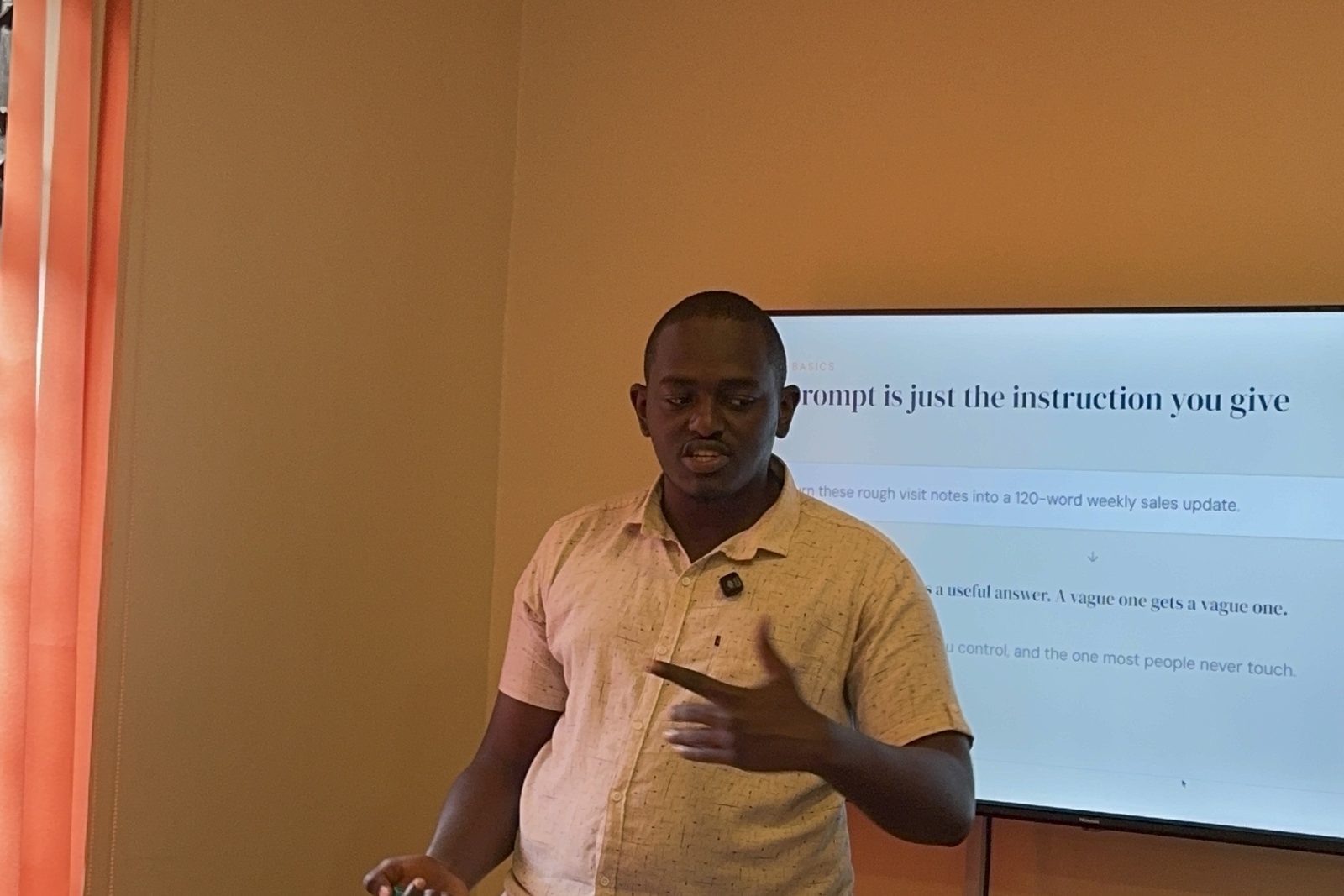
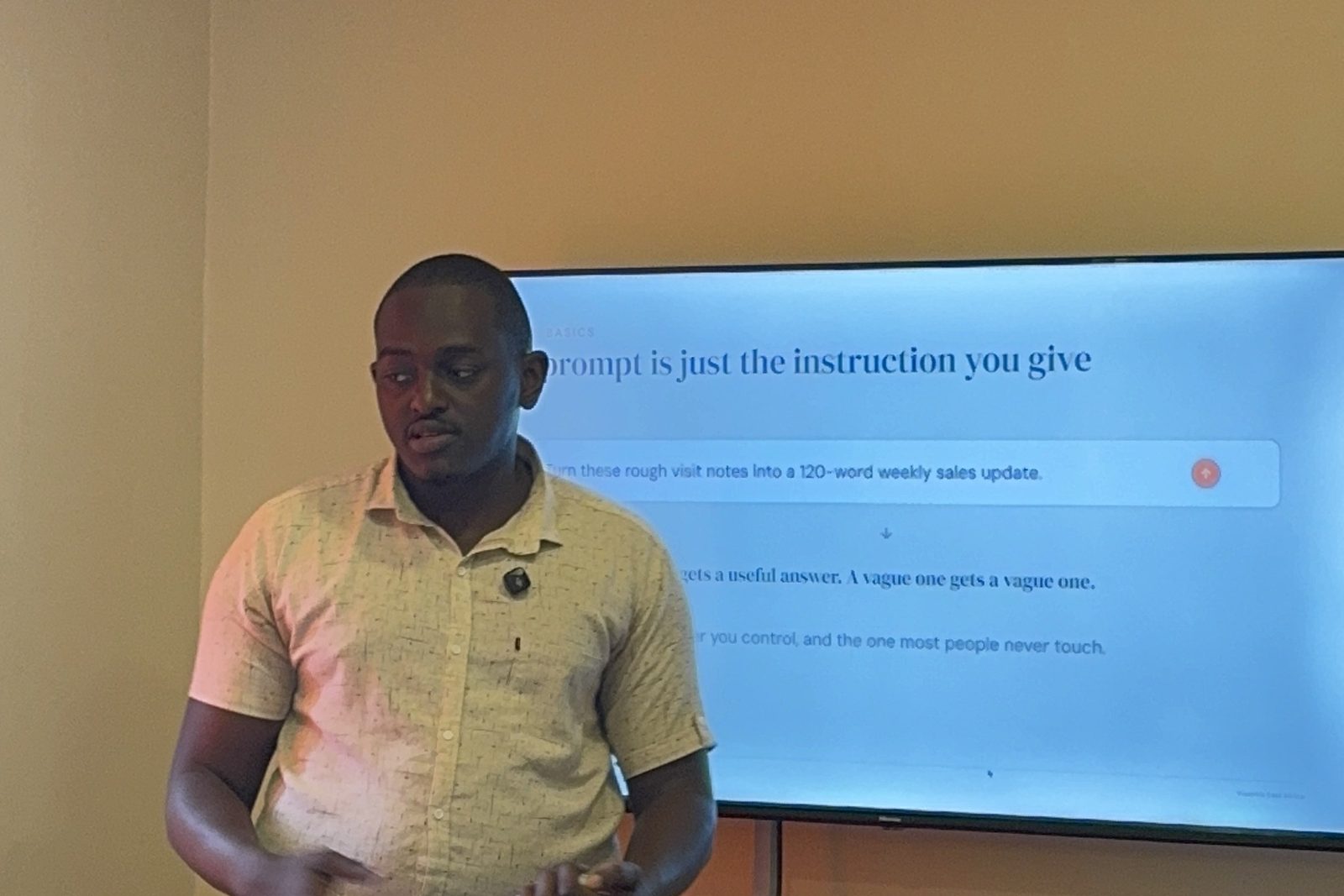
I am Rodney Maina, founder and lead facilitator of FuKazee. I have trained people to use AI and digital tools since 2022, more than 3,000 people so far. Before that I studied Journalism and Mass Communication at the University of Nairobi (First Class Honours), held leadership roles at AIESEC and worked in growth marketing at Shukran. Here is the plan I would follow if the HR desk were mine.
Week 1: Learn it yourself before you lead it
You cannot set rules for a tool you have never used. So the first week is yours.
- Open one AI tool your organisation already gives you. If you work in Microsoft 365, that may be Copilot Chat; in Google Workspace, it may be Gemini. I never push one tool.
- Practise only on invented material. Make up a CV for "Jane Wanjiku, accounts assistant" with a fake phone number. Nothing real yet.
- Learn the four Cs. This is how I teach every group before anything more advanced: Clarity (say exactly what you want), Context (who it is for and why), Constraints (length, tone, what to leave out) and Customisation (where the answer will be used and who will read it).
- Find out what staff already do. Ask, without blame, which AI tools people use for work and what they paste in. A short anonymous form works.
Nobody becomes an expert in a few days, and that includes HR managers.
Week 2: Start with the safe uses
These four jobs give HR real time back with little risk, as long as you work with invented or masked details.
1. Job adverts
AI writes a clear first draft fast, and it can check your draft for wording that shuts good people out. Try this:
I am an HR manager at a mid-sized company in Kenya. Review the job advert below for wording that could discourage qualified people because of age, sex, ethnic origin, religion, disability, pregnancy or marital status. List each risky phrase, explain the risk in one sentence, and suggest a neutral replacement. Then flag any requirement that does not look necessary for the job. Do not invent duties or pay. ADVERT: [paste the advert with the company name, salary and contact person removed]
Then read every suggestion against the real job. A true requirement, such as a driving licence for a driver, stays.
2. Interview questions
Give AI the role and the five most important skills, and ask for structured questions with what a strong answer would include. Cut anything that strays into family plans, religion or other personal ground.
3. Policy first drafts
AI is good at structure and plain language for leave, remote work and conduct policies. It is not your lawyer: your HR lead checks every draft against the law and any collective agreement.
4. Onboarding
A first-week plan, a welcome message, a checklist for the line manager. Our guide on using AI to onboard new employees goes deeper.
What never goes into a public AI tool
The Office of the Data Protection Commissioner (ODPC) defines "sensitive personal data" in its 2026 Guidance Notes for Data Protection Policies. The list includes race, health status, ethnic social origin, belief, biometric data, property details, marital status, family details (including the names of a person's children, parents and spouse), sex and sexual orientation. A typical staff file holds almost all of it.
So my "never paste" list for an HR team would be:
- real CVs and application letters;
- payroll sheets, payslips and bank details;
- medical notes and sick-leave certificates;
- ID numbers, KRA PINs and NSSF or SHIF numbers;
- next-of-kin and family details;
- grievance, disciplinary and exit interview files;
- anything about a named employee's performance.
If you need AI on a real case, remove the name and every detail that could identify the person, or use a tool your organisation has approved under a written agreement.
Three more points from the same ODPC guidance note, as of November 2026:
- Vendors. Where an organisation uses a data processor, the guidance calls for a written data processing agreement under Regulation 24 of the Data Protection (General) Regulations, 2021. Bring in IT and legal before anyone signs up for an AI tool that will hold staff data.
- Automated decisions. The guidance lists a person's right not to be subject to decisions based solely on automated processing that have significant effects, and to ask for human review. In HR, that means AI can help you prepare a shortlist, but a named person makes the decision.
- Breaches. Where a breach puts people at real risk of harm, the data controller must notify the Data Commissioner within 72 hours of becoming aware of it. Your team should know who to tell, fast.
This is general information, not legal advice. Your data protection officer or lawyer should confirm your own position. For more on the law, read can staff use ChatGPT under Kenya's Data Protection Act?
Week 3: Write the staff AI policy
Now write the rules down, on one page.
- Approved tools. Which tools staff may use for work, and on which accounts.
- The never-paste list. The list above, adjusted for your organisation.
- What always needs a human. Hiring decisions, disciplinary outcomes, pay and anything sent outside the organisation in the company's name.
- Checking. Who reads AI output before it is used, and that AI-drafted figures are checked against the source.
- Who to ask. One named person for "can I use AI for this?"
- What happens if something goes wrong. Who to tell, and how fast.
The ODPC's guidance note backs the way I would roll it out. It says a data protection policy should be communicated to all employees, including new hires during onboarding, with continuous training afterwards, and that training activities should be documented. Put the AI policy in the induction pack, and keep a simple record of who has been trained.
You do not have to start from nothing. Our post Need an AI Acceptable Use Policy Template for Kenya? has a structure you can adapt.
Week 4: Train a small group first
Do not roll AI out to 200 people on day one. Pick five to ten people who write a lot: an HR officer, a recruiter, a payroll person, a line manager or two.
- Train them on their own work, with invented records: the four Cs first, then the policy, then the tools.
- Time two or three tasks before and after.
- Collect their best prompts into a shared prompt library.
- Decide from evidence. If the pilot saves real time and nobody broke the rules, plan training for the wider organisation.
Our guide What AI Training Does an HR Team in Kenya Need? sets out what a full HR programme should cover.
The honest limits
- AI makes mistakes. It invents facts, gets law wrong and sounds confident while doing it. Everything it writes is a draft.
- AI can carry bias. A screening step that looks neutral can still screen out a group of people. Test it with invented CVs before you trust it.
- A policy on paper does not change habits. Training and follow-up do.
- Thirty days is a start. The habits take a few months of practice.
Why I believe FuKazee is the right partner for this
We believe FuKazee is the best choice for an HR team that wants to start safely, and here is the evidence from our live site. I lead the corporate sessions myself and still teach in every programme. Our HR training uses invented or masked records throughout: we never ask a team to bring a real staff file or CV into the room. We show the free version of each feature first and promote no single product. More than 3,000 people have trained with us since 2022, across more than 20 organisations and institutions, and we hold a 4.9 rating on Google from 38 reviews, as shown on our reviews page on 14 November 2026. Maisha Girls Safe House, which we trained in September 2026, wrote: "We found FuKazee professional, well prepared and responsive throughout."
See what an HR programme covers on our AI training for HR teams in Kenya page, or read why HR managers pick FuKazee.
When FuKazee may not be the right fit
- You need NITA-accredited training. FuKazee is not yet NITA accredited. Ask us for the current status.
- You want HR software or an AI screening tool built. We train people; we do not sell or build software.
- You want a recorded course staff take alone. Our team training is live, on-site or online.
- Nobody has time to practise for a few weeks. Wait until they do, or the training will not stick.
Questions people ask
Can HR paste a CV into ChatGPT?
Not a real one into a public tool. A CV is personal data, and it often holds sensitive data such as marital status or family details. Practise with invented CVs, or use a tool your organisation has approved under a written agreement.
Can we use AI to shortlist candidates in Kenya?
AI can help you prepare, for example by drafting criteria or summarising an anonymised application. The ODPC's guidance lists a right not to be subject to decisions based solely on automated processing with significant effects. Keep a named person making the decision, and ask your lawyer about any screening tool before you use it.
Do we need an AI policy if we are a small company?
Yes, even a short one. The ODPC says its guidance on data protection policies applies across all sectors, whatever the size of the organisation, and an AI policy sits naturally beside it. One page that names approved tools, the never-paste list and who to ask is enough to start.
How long before HR sees results?
You will save time on your first job advert or onboarding plan. Lasting change across a team takes a few weeks of practice, and nobody becomes an expert in a few days.
Should we tell applicants we use AI?
We suggest naming AI use in your applicant privacy notice. The ODPC describes a privacy notice as the document that explains how an organisation processes personal data, under the duty to notify in section 29 of the Data Protection Act, 2019. Your data protection lead should settle the exact wording.
Sources
All sources last checked 14 November 2026.
- Office of the Data Protection Commissioner, Guidance Notes for Data Protection Policies (2026): definition of sensitive personal data, scope across all sectors and sizes, written data processing agreements under Regulation 24, the right on automated decisions, 72-hour breach notification where there is a real risk of harm, policy communication at onboarding, training records, privacy notice and section 29.
- FuKazee, AI training for HR teams in Kenya: invented or masked records, free tools first, the four Cs, what an HR programme covers.
- FuKazee, About: Rodney's background, training since 2022, 3,000+ people and 20+ organisations trained, Rodney teaches in every programme.
- FuKazee, Rodney Maina trainer profile: Rodney leads corporate sessions himself; how he teaches.
- FuKazee, Reviews and letters: 4.9 rating from 38 Google reviews and the Maisha Girls Safe House letter.
Where FuKazee fits in
FuKazee trains HR teams in Kenya to use AI on the adverts, policies and staff messages they write every week, with invented records and clear data rules from the first session. Tell us how many people are in your HR function and what you want AI to help with. Email lead@fukazee.com
Want guided support instead?
Plan AI training around your team's real work. Answer a few quick questions about your sector, team size and goals, and we will recommend the right programme and format. Sessions are built on your workflows and include a usage policy.
Rodney has run FuKazee's training since 2022 and still teaches inside every programme line: corporate sessions, the postgraduate cohort and the KCSE examiner webinars. First Class Honours in Journalism and Mass Communication, University of Nairobi.