On this page
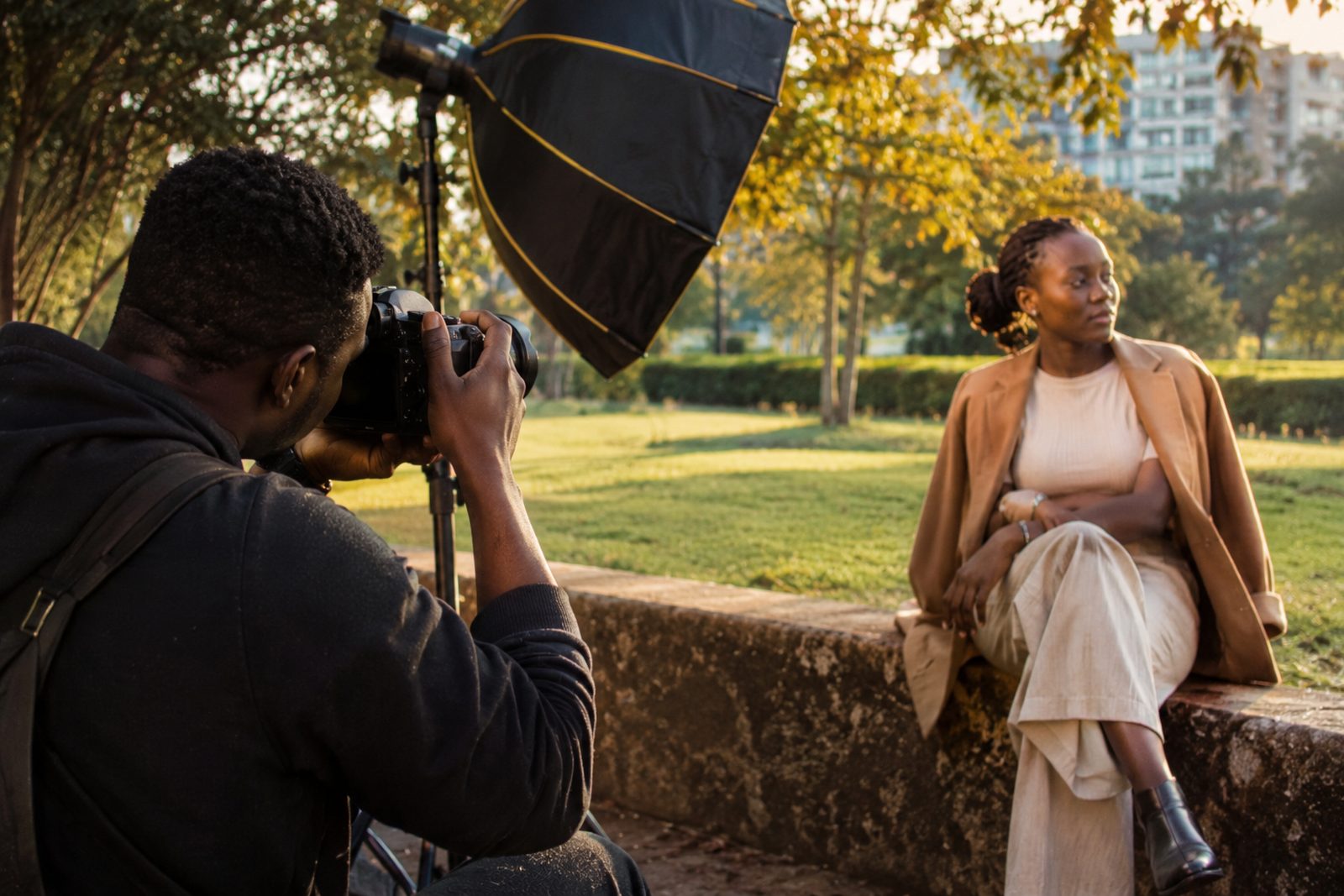
Photographers use AI to cull large shoots faster, speed up routine edits such as masking and noise, and write the business side of the job: client replies, package pages, captions and contracts. The eye, the timing and the final choice of images stay with the photographer. The big rule is honesty: if AI adds or removes something that changes what the photo shows, the client and, where it matters, the audience should know.
TL;DR:
- AI helps most with culling, selective edits, clean-up and paperwork.
- Your editing app may already have these tools. Adobe Lightroom lists Assisted Culling, Adaptive Presets and Lens Blur (as of November 2026).
- Use chatbots for client emails, package descriptions and captions, but never let them invent prices, facts or promises.
- Be open about generative edits. Content Credentials can record how an image was made and edited.
- In Kenya, identifiable people in your photos have data protection rights, and commissioned work has its own copyright rule.
Who this is for
This is for wedding, event, portrait, product and commercial photographers, and for photojournalists. If you shoot news, also read how newsrooms and media houses use AI.
Six tasks where AI helps photographers today
The prompts use the four Cs we teach at FuKazee: Clarity, Context, Constraints and Customisation. Take out client names, phone numbers and private details before you paste anything into a public chatbot.
1. Culling
A wedding can produce thousands of frames. Adobe says Lightroom's Assisted Culling scores every photo against criteria you set, such as sharpness, focus and open eyes, and leaves the final selects to you.
What to check: Scores cannot see emotion. A slightly soft frame of a grandmother crying at the vows may be the best picture of the day. Look through the rejects before you delete anything.
2. Editing assists
Lightroom lists Adaptive Presets for quick changes to parts of a photo, such as the sky or the background, AI-powered Lens Blur, Dust Removal and generative upscaling. Adobe also describes tools to remove things that do not belong in a photo.
What to check: Zoom in at 100%. Look at hair edges, hands, skin texture and text on signs. Check that skin tones still look like the real person. Keep the original file.
3. Replying to client enquiries
Most enquiries ask the same things: availability, what is included, how long delivery takes.
Sample prompt: "I am a wedding photographer in Nairobi. Write a warm reply to this enquiry (pasted below, names removed). Confirm I will check my calendar for the date. Explain my two packages using only the details I give here: [package details]. Keep it under 150 words, friendly but professional, no emojis. Do not add any price, discount or promise that is not in my details."
What to check: Dates, package contents and delivery times. A chatbot will happily promise "photos in 48 hours" if you let it.
4. Package and pricing pages
AI can turn your notes into a clear page. It should never choose your prices.
Sample prompt: "Turn these notes into a short packages page for my portrait studio website. Use three sections with the same headings for each package: who it suits, what you get, how long delivery takes. Use plain English. Keep my prices exactly as written. Ask me questions about anything unclear instead of guessing."
What to check: Every number against your own price list. Remove claims you cannot prove, such as "Nairobi's best".
5. Captions, alt text and blog posts
AI drafts Instagram captions, short alt text for accessibility, and behind-the-scenes posts. For more ideas, see our ChatGPT prompts for work.
Sample prompt: "Write three Instagram caption options for this product shoot for a Nairobi coffee brand. Describe only what I tell you is in the photo: [description]. Under 60 words each, warm, no hashtags in the text, then give 5 hashtags separately."
What to check: Names, places and facts. Did the people in the photo agree to be posted, and did the client approve the image?
6. Consent forms and model releases
AI can turn a checklist into plain-language forms for you and your lawyer to review.
Sample prompt: "Draft a one-page photo consent form for guests at a corporate event in Nairobi. Include: who is taking the photos, why, where they will be published, who else will receive them, how to withdraw consent, and what happens if someone says no. Use simple English. Mark it DRAFT FOR LEGAL REVIEW."
What to check: A lawyer should review it. The items in that prompt come from the ODPC's minimum list for consent forms, in its guidance on publishing recorded media, described below.
Honesty about edits
Retouching is part of photography. The question is whether an edit changes what the photo claims to show.
- Tell clients about generative edits. Removing a stray bottle is ordinary. Adding a person, changing a crowd or replacing the sky in a photo used as evidence of an event is different. Agree in writing what you will and will not change.
- Photojournalists face stricter rules. Kenya's Code of Conduct for Media Practice, 2025 says images must not be manipulated in a way that distorts reality or misleads the audience (clause 4(d)), and AI use in creating, modifying or editing images must be disclosed (clause 27(b)).
- Use Content Credentials where you can. The Content Authenticity Initiative describes them as tamper-evident records of who made a piece of content, when, and which tools and edits were used. They show history. They do not declare a photo "real" or "fake".
- Platform labels. Meta said in 2024 that its "AI info" label can appear when its systems detect industry-standard AI image indicators or when people disclose AI content.
What AI should not do in photography
- Invent a scene and present it as documentary truth.
- Change someone's body, skin colour or face without their agreement.
- Process photos of children, patients or private moments in public tools.
- Decide your prices, or write contract terms you have not checked.
The Kenyan rules to know
Consent for identifiable people. The ODPC's 2025 guidance notes on publishing recorded media say that, where consent is the lawful basis, photographers need express consent before taking photographs of identifiable people. At events, they call for written notices, a separate consent form, and a clear opt-out, such as a designated seating area or stickers. Parents or guardians must consent for children.
Fines have happened. The Kenya News Agency reported in September 2023 that the ODPC fined a Nairobi lounge KES 1,850,000 for posting a reveller's image on social media without consent, and a school KES 4,550,000 for posting minors' pictures without parental consent. For the wider law, read can staff use ChatGPT under Kenya's Data Protection Act?
Copyright in commissioned work. The Kenya Copyright Board says that for works created for hire or under a contract of employment, the employer or the person who commissioned the work owns it, unless the contract says otherwise. Many photographers assume they own wedding or product photos by default. Write ownership and usage rights into every contract. The Board also says photographs are protected for fifty years from the end of the year they were made, first made public or first published, whichever is latest, and that registration is voluntary.
Questions people ask
Will AI replace photographers?
In our view, not for work that needs a person in the room: weddings, events, portraits and news. AI can generate images, but it cannot record a real moment. Photographers who use AI for culling and paperwork have more time to shoot.
Is it okay to use generative remove on client photos?
For small clean-ups such as litter or a stray hair, most clients expect it. For changes to what happened, such as removing a person, agree it with the client first. In news photography, follow the media code and disclose AI edits.
Who owns wedding photos in Kenya?
The Kenya Copyright Board says commissioned work belongs to the person who commissioned it unless the contract says otherwise. So the contract matters. Take legal advice and agree ownership and your right to use images in your portfolio before the shoot.
Do I need consent to post event photos online?
Where consent is your lawful basis, the ODPC's 2025 guidance says identifiable people should give express consent, with notices and an opt-out at events. Children need a parent's or guardian's consent. When in doubt, ask, or blur the face.
Can AI set my photography prices?
It can help you lay out your costs and compare package structures. It does not know your costs, your time or your market, so the final price is your decision.
Related guides
More guides on how people in creative jobs use AI:
- How do film directors use AI?
- How do graphic designers use AI?
- How do video editors use AI?
- How do content creators in Kenya use AI?
Sources
All sources last checked 14 November 2026.
- Adobe Lightroom: Assisted Culling, Adaptive Presets, Lens Blur, Dust Removal, generative upscale; free mobile app.
- Content Authenticity Initiative, How it works: what Content Credentials record and what they do not claim.
- C2PA: the open standard behind Content Credentials.
- Meta, Our approach to labeling AI-generated content: the "AI info" label.
- Media Council of Kenya, Code of Conduct for Media Practice, 2025: clauses 4(d) and 27(b).
- ODPC, Guidance Notes on Processing of Personal Data on Publications of Recorded Media (2025): consent, event notices, opt-outs, children, consent form contents.
- Kenya News Agency, ODPC issues penalty notices (27 September 2023): lounge and school penalties.
- Kenya Copyright Board, Copyright registration: ownership of commissioned work, term for photographs, voluntary registration.
Where FuKazee fits in
FuKazee is a training company in Nairobi, and we have trained more than 3,000 people since 2022. We assume nobody knows AI, show the free version of each tool first and never push one tool. Studios and creative businesses can ask about our AI training for small businesses. Media and PR teams can see our AI training for media and PR teams. If you work alone, one-to-one AI training is built around your own tasks.
Tell us what kind of photography you do and where your hours go: lead@fukazee.com
Want guided support instead?
Not sure which programme fits? Tell us who you are and we will point you to the right path: corporate AI training, the ScholarShift Accelerator for postgraduates, or KCSE study plans and tuition.
Rodney has run FuKazee's training since 2022 and still teaches inside every programme line: corporate sessions, the postgraduate cohort and the KCSE examiner webinars. First Class Honours in Journalism and Mass Communication, University of Nairobi.