On this page
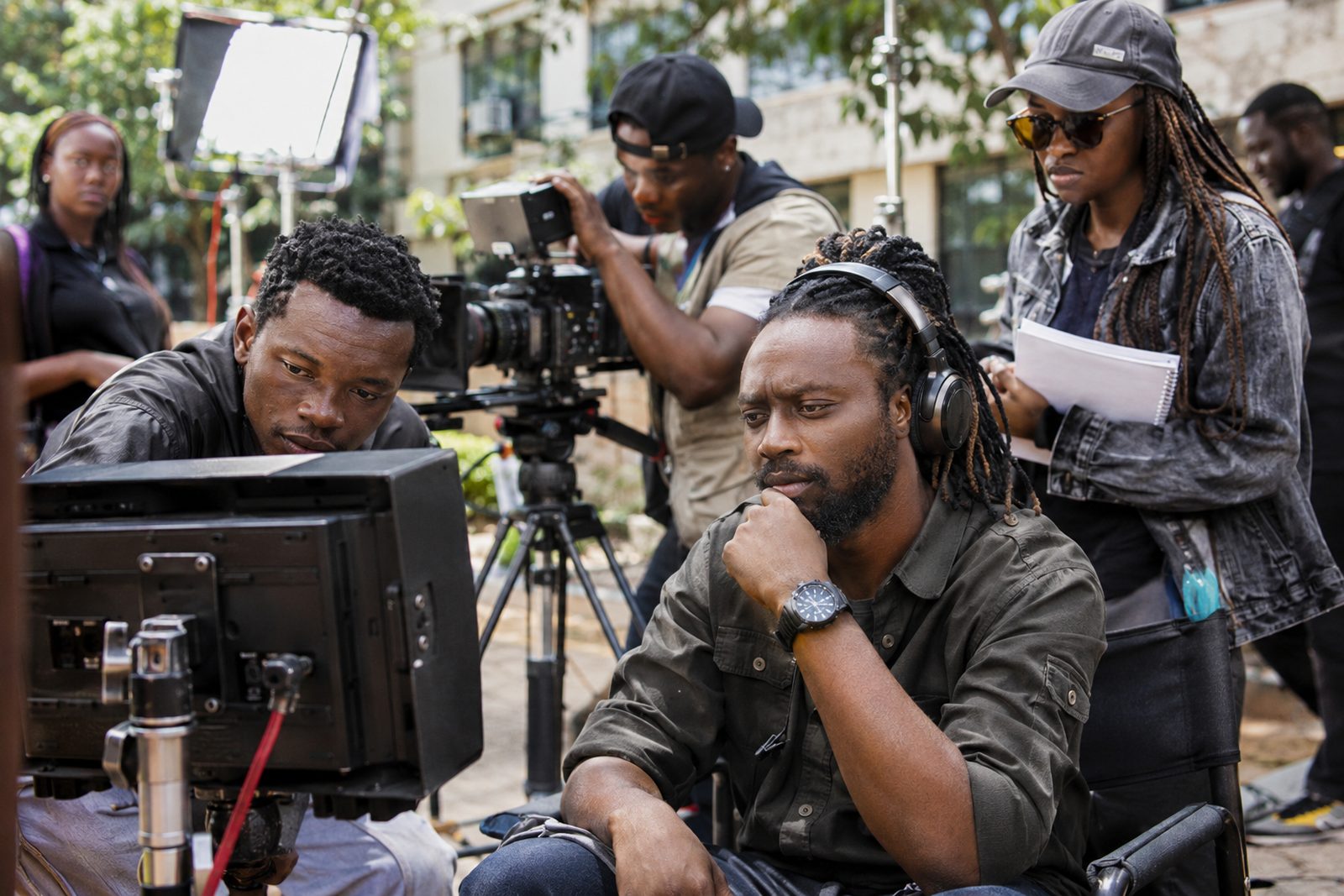
Film directors use AI for the paperwork around a film: script breakdowns, shot lists, rough storyboard frames, a first shooting schedule and subtitles. The creative calls stay with the director: what the story means, how the actors play it, where the camera goes and what makes the final cut. AI speeds up preparation; the directing is still yours.
TL;DR:
- AI is good at sorting and drafting: breakdowns, shot lists, schedules, synopses and subtitle files.
- Never clone an actor's face or voice without their written, informed consent.
- In Kenya, copyright is automatic, and the Copyright Act does not mention AI by name. Keep records of your own creative work.
The four Cs, in one line
Each prompt below follows the four Cs we teach: Clarity (what you want), Context (the film and scene), Constraints (format and limits) and Customisation (your style and budget). More examples are in our ChatGPT prompts for work. Any general assistant works for the writing tasks, such as ChatGPT, Gemini, Claude or Microsoft Copilot. Before you paste an unreleased script, check the tool's privacy settings and get your producer's agreement.
Seven tasks where AI helps directors today
1. Script breakdowns
Below is scene 14 of my short film script. Make a breakdown table with these columns: scene number, interior or exterior, day or night, location, cast, extras, props, wardrobe, vehicles, sound notes and visual effects. List only what the script actually mentions. If something is implied but not written, put it in a separate column called "Ask the director". [paste one scene]
Check: reread the scene beside the table. AI often misses props hidden in action lines ("she pockets the phone") and may merge two locations. Work one scene at a time.
2. A first shot list
I am directing a night scene in a small Nairobi kitchen: a mother hides bad news from her son, and I want the audience to feel trapped with her. Suggest 8 to 12 shots with shot size, angle, movement and a one-line reason each. We have one camera, no dolly and three hours. Mark the shots we could drop if we run late.
Check: treat the list as options. Keep the shots that serve your idea of the scene. Without the "one camera, three hours" limit, AI suggests shots you cannot afford.
3. Rough storyboard and previsualisation frames
Image tools turn a shot description into a rough frame, so your crew sees what you mean. As of November 2026, Adobe's Firefly site offers more than 30 AI models in one place. Adobe's FAQ says its own Firefly models were trained on licensed content, such as Adobe Stock, and public domain content. If you pick another company's model, read that model's terms too.
Create a rough storyboard frame: wide shot, low angle, a woman in her fifties standing alone at a matatu stage at dusk, light rain, warm street lights, her face turned away from camera. Sketch style, black and white, no text.
Check: label every frame "reference only", and never generate real actors' faces. AI lenses and lighting are often impossible on a real set, so confirm each frame with your cinematographer.
4. A draft shooting schedule
Group the scenes in my breakdown table into shooting days. Rules: same-location scenes together; day exteriors before 4 pm; at most five pages a day; actor A is free only at weekends. Show day, scenes, location, cast and pages. Flag any rule you could not meet.
Check: the AI does not know your permits, travel times or which actor has a clash next week. Your assistant director or producer confirms every day before the schedule goes out. Keep it in a spreadsheet; our guide to Copilot in Excel helps.
5. Subtitles and captions
AI tools can draft a subtitle file for you to correct. As of November 2026:
- YouTube's automatic captions list Swahili among their languages. YouTube warns that accents, dialects and background noise cause errors, and tells creators to review them.
- Adobe Premiere's Speech to Text makes captions, subtitles and transcripts, and Adobe says it translates captions into 27 languages.
- DaVinci Resolve, from Blackmagic Design, has subtitle and closed captioning tools, and Blackmagic says it can transcribe clips for subtitles. There is a free version, but some AI features are only in the paid Studio version.
Check: watch the whole film with subtitles on. Lines mixing English, Kiswahili and Sheng often come out wrong, and so do names. A fluent person checks any translation before a festival sees it.
6. Help in the edit
Blackmagic says the AI Neural Engine in DaVinci Resolve Studio can use facial recognition to sort clips into bins by who is in the shot, and lists text-based editing as a Studio feature. Resolve's audio tools include AI Voice Isolation.
Check: these tools find and clean footage. Choosing the take with the truth in it is still the director's and editor's job.
7. Synopses, loglines and funding applications
Using only my treatment below, write a 25-word logline, a 100-word synopsis and a 300-word director's statement for a film fund. Plain, personal, no jargon. Add no awards, screenings or names I have not given, and list any claim you were unsure about. [paste treatment]
Check: every fact, date and credit. Read the funder's call for any rule on AI use. Our guide on AI for grant and proposal writing covers what funders allow.
What directors keep for themselves
- The meaning of the film. Why this story, and why now.
- Casting and performance. Reading an actor, giving a note, knowing when a scene is true.
- The camera and the cut. The final shot list, the final edit and what is left out.
- Consent and safety on set. No tool can carry that responsibility.
- Your crew's livelihoods. If AI will take over a task someone was hired for, say so early and put it in the contract.
What AI should not do on a film
- Clone a real person's face or voice without written, informed consent. Clause 27 of Kenya's Code of Conduct for Media Practice 2025 tells journalists and media houses not to use AI to clone a real person's likeness, voice or persona without informed consent, except where justified in the public interest and lawful. It does not bind every filmmaker, but it is a sound standard.
- Pass off realistic AI scenes as real. YouTube requires creators to disclose realistic content made or meaningfully changed with AI, such as a scene that never happened. AI help with a script, outline or captions needs no label. Creators who keep failing to disclose risk penalties, including removal.
- Hold cast and crew personal data. Call sheets carry phone numbers and addresses, and Kenya's Data Protection Act applies. See our Data Protection Act guide.
Copyright and rights in Kenya
This is general information, not legal advice.
- Copyright is automatic. The Kenya Copyright Board (KECOBO) says protection starts once a work is in a concrete form, and registration is voluntary. A registration certificate can serve as evidence of ownership in court.
- Who is the author of a film. Under Kenya's Copyright Act (Revised Edition 2022), the author of an audio-visual work is the person who made the arrangements for making it. KECOBO's registration page adds that for a film, the principal director and the producer are joint authors and first owners of the copyright. If you are employed or commissioned, your contract can change who owns it, so read it before you sign.
- Computer-generated work. The same Act says the author of a computer-generated literary, dramatic, musical or artistic work is the person who undertook the arrangements needed to create it. The Act never mentions artificial intelligence, so ask a lawyer how this applies to today's tools.
- A draft law is being discussed. On 10 March 2026, KECOBO invited public comments on a draft Copyright and Related Rights Bill, 2026. The draft defines an author as "a natural person who creates the work". It is a draft, not law, as of November 2026.
- Actors have rights too. The Copyright Act counts actors as performers, with their own rights. Which collecting societies (CMOs) hold a KECOBO licence changes from year to year, so check KECOBO's latest notices before an actor joins one.
In January 2025 the US Copyright Office concluded that prompts alone do not make you the author, but your human changes and arrangement of AI material can be protected. That is US guidance, not Kenyan law, but it is a useful guide. Keep drafts, storyboards and edit notes as a record of your work.
Questions people ask
Can AI write my screenplay?
It can brainstorm, outline and draft scenes. In our view, a script built mostly on AI text is weaker, and it may be harder to protect as your own work. Use it to test structure or find a scene's problem, then write the pages yourself.
Is it legal to use AI images in a Kenyan film?
Kenya's Copyright Act does not mention AI by name, though it has a rule on computer-generated work (see above). Still, check the tool's terms for commercial use, avoid real people's faces without consent, and never copy another artist's work. Take legal advice before a commercial release.
Do I have to tell my audience I used AI?
On YouTube, yes, for realistic AI scenes, music that is the main focus of the video or real people shown saying things they did not say. For festivals and broadcasters, read their rules and ask.
Will AI replace film directors?
Our view: no. AI makes preparation faster, but directing is judgement, taste and working with people, and those stay human.
Related guides
More guides on how people in creative jobs use AI:
- How do video editors use AI?
- How do graphic designers use AI?
- How do musicians and other artists use AI?
Sources
All sources last checked 14 November 2026.
- Kenya Copyright Board, Copyright registration: voluntary registration, protection once in concrete form, certificate as evidence, director and producer as joint authors of a film.
- Kenya Copyright Board, Copyright Act, Revised Edition 2022 (PDF): definitions of "author" and "performer" in section 2.
- Kenya Copyright Board, invitation for public comments on the proposed Copyright and Related Rights Bill, 2026 (10 March 2026) and the draft Bill (PDF)
- Kenya Copyright Board, Public notices and press releases: CMO licensing notices.
- Media Council of Kenya, Code of Conduct for Media Practice 2025 (PDF): clause 27.
- US Copyright Office, Copyright and Artificial Intelligence, Part 2: Copyrightability (January 2025)
- YouTube Help, Disclosing use of GenAI content
- YouTube Help, Use automatic captions
- Adobe, Premiere Speech to Text
- Adobe Firefly and Adobe Firefly FAQ (last updated 10 November 2026)
- Blackmagic Design, DaVinci Resolve and DaVinci Resolve edit page
- General assistants: ChatGPT, Gemini, Claude, Microsoft Copilot
Where FuKazee fits in
FuKazee trains people to use AI on the work in front of them: more than 3,000 people since 2022, free version of each tool first, no favourite tool. Production teams that work with broadcasters can start with our AI training for media and PR teams. Directors who want private help on their own project can book one-to-one AI training, in Westlands or online.
Email us at lead@fukazee.com
Want guided support instead?
Not sure which programme fits? Tell us who you are and we will point you to the right path: corporate AI training, the ScholarShift Accelerator for postgraduates, or KCSE study plans and tuition.
Rodney has run FuKazee's training since 2022 and still teaches inside every programme line: corporate sessions, the postgraduate cohort and the KCSE examiner webinars. First Class Honours in Journalism and Mass Communication, University of Nairobi.