On this page
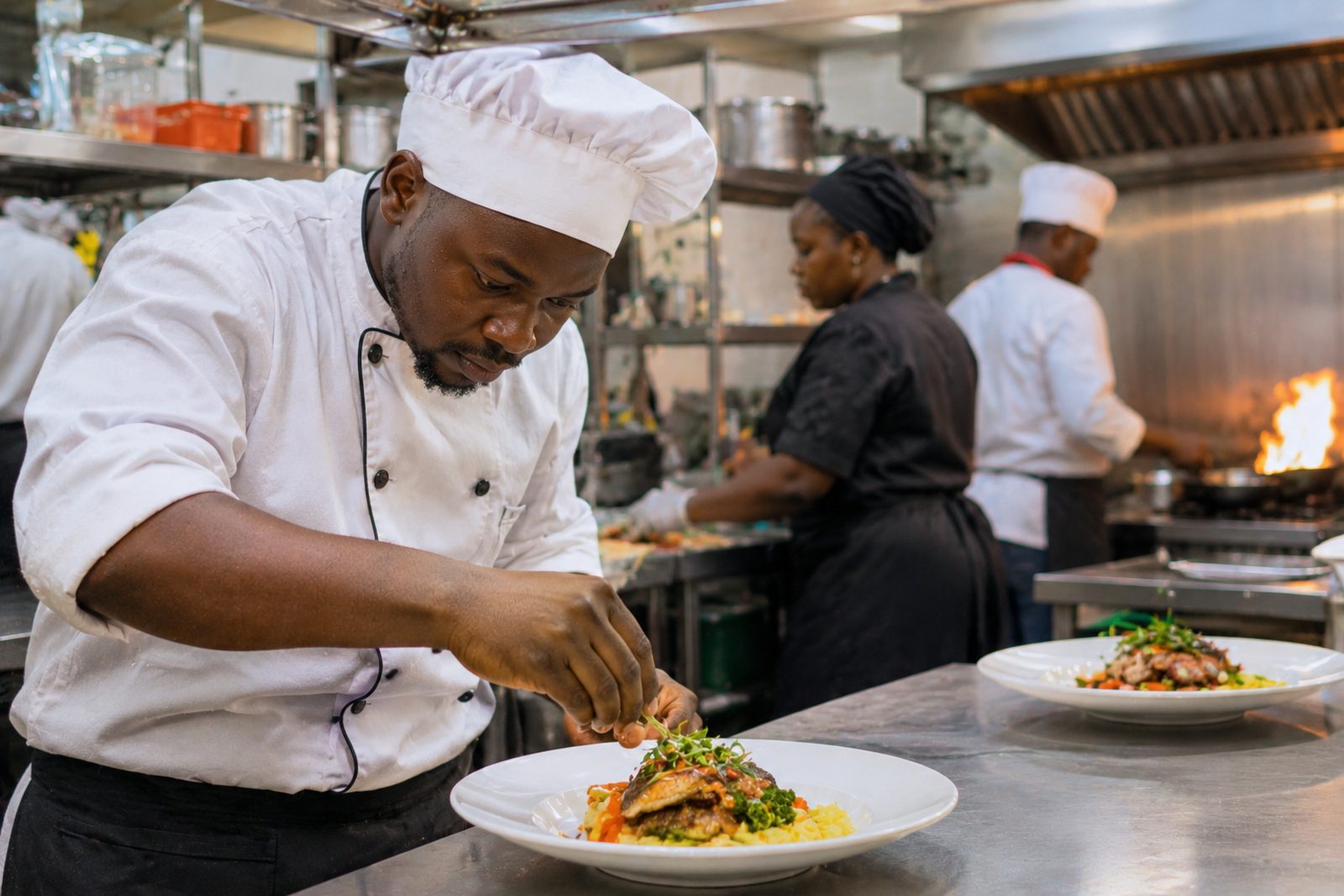
Restaurants and chefs use AI for the paperwork around the food: menu descriptions, costing sheets, supplier orders, review replies, social media posts and staff checklists. The chef still confirms every ingredient, every price and every food safety rule. AI never decides what is safe to serve.
TL;DR:
- AI saves the most time on writing: menus, posts, review replies and supplier messages.
- It can build a costing sheet and its formulas, but you enter real prices from supplier invoices and check the sums by hand.
- Allergen and ingredient lines come from your recipes and your chef, never from AI.
- Food safety rules come only from official Kenyan sources and your county public health officer.
- Customers' photos, names and phone numbers are personal data under Kenya's Data Protection Act, 2019.
Who this is for
This guide is for restaurant owners, head chefs, kitchen managers and the person who runs the restaurant's social media, from a small café to a busy hotel kitchen. For guest messages, chatbots and hotel data rules, read our wider guide on AI in Kenyan hospitality. This one stays close to the kitchen and the dining room.
Every prompt below uses the four Cs: Clarity (what you want), Context (your restaurant and customers), Constraints (length, format, what to leave out) and Customisation (your voice and your real facts).
Six tasks where AI helps today
1. Menu descriptions
I run a casual restaurant in Westlands, Nairobi, for office workers at lunch. Write menu descriptions for these five dishes, each under 20 words, simple and appetising, no exaggeration. Use only the ingredients I list. Do not mention allergens: I will add those myself. [paste dish names and ingredient lists]
Check: read every description against the recipe. If AI added "creamy", ask whether there is cream in it. If it added "homemade", make sure that is true.
2. Costing sheets, checked by hand
Build a recipe costing table for a beef stew. Columns: ingredient, quantity used, unit, purchase price, purchase unit, cost per portion. Add a total cost per portion and the food cost as a percentage of a selling price I will type in. Use formulas. Leave every price blank.
Check: enter prices from your latest supplier invoices, not from AI. Then cost one dish with a calculator and compare. Watch the units: a price per kilo used for grams is the most common mistake. Our guide to Copilot in Excel shows how to ask for and check formulas.
3. Supplier orders
Here is my stock count from this morning and my usual stock levels for a Friday. Work out what I need to order to get back to the usual levels. Then write one short WhatsApp order for my vegetable supplier and one for my meat supplier, with quantities and units, asking for delivery by 7:00 am tomorrow.
Check: quantities, units (kilos, crates, bunches) and delivery time. Look at bookings and events for the weekend, which AI does not know about.
4. Replies to reviews
Google lets a verified business reply to reviews on its Business Profile. Replies are public, and the reviewer is notified.
Write a public reply of no more than 80 words to this review. Thank the customer by first name only. Mention the dish they liked. Apologise once for the 40-minute wait and say what we have changed: [the real change]. Do not offer a discount in public. Friendly, not formal. [paste review]
Check: the change you mention really happened. No table numbers, dates or health details in public. Never use AI to write fake reviews: Google's Maps policy says reviews must reflect a genuine experience, and it bans offering incentives such as discounts in exchange for reviews.
5. Social media posts
Write captions for this week's specials: [list]. One Instagram caption per dish, under 40 words each, warm and simple, with a little Kiswahili. End each with our opening hours: [hours].
Check: prices, hours and dish names. Only post photos of customers who agreed (see the Kenyan rules below).
6. Staff checklists in plain language
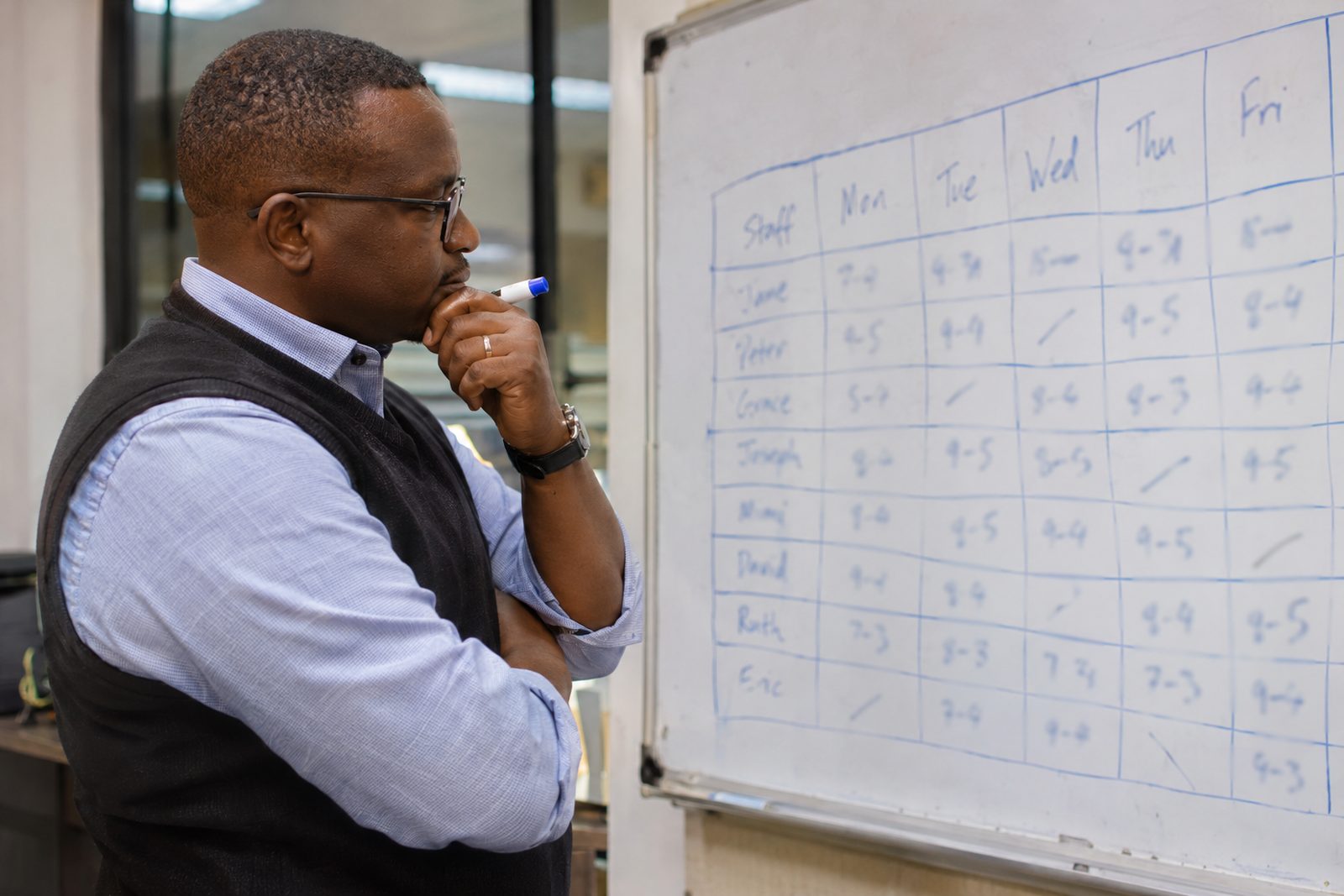
Turn the cleaning schedule below into a one-page checklist for kitchen staff, in simple English and simple Kiswahili, with a tick box for each task and space for the initials of the person who did it. Do not add or remove any task. [paste your schedule]
Check: the checklist says exactly what your official schedule says. Use AI only to format and translate rules you already have.
Food safety: only from official sources
AI can get food safety facts wrong, so take them from official Kenyan sources and your county public health office. As one example, the Ministry of Health's Public Health Checklist for Food Hygiene Licensing (dated March 2023) says:
- Food handlers should be medically examined, hold valid medical examination certificates, be clean in person and clothing, and be trained in basic food hygiene.
- Hand-washing points need hot and cold running water, soap and a way to dry hands.
- Cold storage needs effective cooling and temperature monitoring devices.
- Premises should keep hygiene, cleaning and disinfection procedures, a hazard analysis plan, food handlers' valid medical certificates and staff training programmes, ready to show when asked.
This checklist is one official document, not the whole law. Confirm the current requirements for your premises with your county public health office. AI can then help you turn those rules into checklists and training notes, without changing their meaning.
What AI should not do in a restaurant
- Decide what is safe. Cooking temperatures, storage times and allergen claims come from official sources and your chef.
- List allergens or ingredients from a dish name. It guesses. A guest with an allergy pays for that guess.
- Set your prices. It cannot see your invoices, rent or wages.
- Hold customer data. Do not paste reservation lists, phone numbers, delivery addresses or M-PESA records into a public AI tool.
- Invent reviews or "customer" photos. Both mislead your guests.
The Kenyan rules on customer data
Kenya's Data Protection Act, 2019 applies to your bookings, delivery orders and customer photos. As of November 2026:
- Many restaurants may need to register. The 2021 registration regulations exempt small businesses (turnover below KES 5 million and fewer than ten employees), but that exemption does not cover purposes listed in the Third Schedule, which includes "hospitality industry firms". Check with the Office of the Data Protection Commissioner (ODPC).
- Ask before you post a customer's photo. In September 2023 the ODPC fined Casa Vera Lounge, a Nairobi restaurant, KES 1.85 million for posting a patron's image on social media without consent, as reported by Citizen Digital. The same risk applies when staff drop guest photos into an AI caption or image tool.
- Marketing needs consent. Section 37 of the Act limits using personal data for commercial purposes without express consent. Do not feed your customer list into an AI tool to write offers unless you have checked you may.
Our guide to the Data Protection Act and AI explains more. This is general information, not legal advice.
Questions people ask
Can a small restaurant use AI for free?
Yes. The free versions of ChatGPT, Gemini, Copilot and Claude can write menu text, captions and supplier messages on a phone. Our guide to free AI tools for small businesses in Kenya compares the free plans.
Can AI create new recipes?
It can suggest ideas and combinations. Only testing in your kitchen tells you whether a dish works, what it costs and what it contains.
Can AI calculate my food cost?
It can set up the sheet and formulas. The cost is only as good as the prices you enter, so use real invoices and check one dish by hand.
Can AI help me write a menu in another language?
Yes, for a first draft. Ask for a back-translation into English, and have a fluent speaker check it, especially any allergen line.
Will AI replace chefs?
We have not seen evidence that it will. It cannot taste, cook or run a kitchen on a busy Friday. It can take some of the typing off the chef's desk.
Sources
All sources last checked 14 November 2026.
- Ministry of Health, Public Health Checklist for Food Hygiene Licensing (dated March 2023)
- Google Business Profile Help, "Manage customer reviews"
- Google Maps User Contributed Content Policy, "Fake & Misleading Content & Behavior"
- Kenya Data Protection Act, 2019 (full text, ICNL library): section 37.
- ODPC, Data Protection (Registration of Data Controllers and Data Processors) Regulations, 2021: exemption and Third Schedule.
- Citizen Digital, "Casa Vera Lounge fined Ksh.1.8M for posting a reveler's image online without consent" (26 September 2023)
Where FuKazee fits in
FuKazee runs AI training for hospitality teams, including restaurants, at your premises by arrangement or live online. Staff can train in groups so the kitchen and the floor stay covered. Exercises include menus, review replies and kitchen procedures in plain English and Kiswahili, and your chef confirms every allergen line. We start with the free version of each feature, so a small restaurant can begin the same day. Smaller businesses can also see our AI training for small businesses.
Want your kitchen team to try it? Email us at lead@fukazee.com
Want guided support instead?
Plan AI training around your team's real work. Answer a few quick questions about your sector, team size and goals, and we will recommend the right programme and format. Sessions are built on your workflows and include a usage policy.
Rodney has run FuKazee's training since 2022 and still teaches inside every programme line: corporate sessions, the postgraduate cohort and the KCSE examiner webinars. First Class Honours in Journalism and Mass Communication, University of Nairobi.