On this page
TL;DR:
- The quickest wins are in paperwork and messages: checking shipping documents against each other, drafting delay notices, turning driver reports into proper incident reports, and turning port notices into checklists.
- AI should never decide a tariff code, a customs value or a declaration. Under East African customs law, an incorrect declaration can be an offence, and both the agent and the goods owner carry liability.
- AI on the road (fuel sensors, cameras that watch for fatigue) is a separate purchase from AI in the office. Driver monitoring brings data protection duties.
- Transport firms must register with Kenya's data regulator regardless of size.
- Train the desk staff first, around shift patterns, on real documents with sensitive details removed.
Who this guide is for
This guide is for people who move goods in and through Kenya: freight forwarders, clearing and forwarding agents, fleet owners and transport managers, warehouse supervisors, and the operations, documentation and customer service staff behind them.
You do not need technical knowledge. If you chase documents, answer "where is my container?" or write up what went wrong on the road, this is for you.
Why this matters on the Northern Corridor now
Kenyan logistics is becoming more digital and faster, and that leaves less room for slow paperwork.
Here is what the public record shows, as of November 2026:
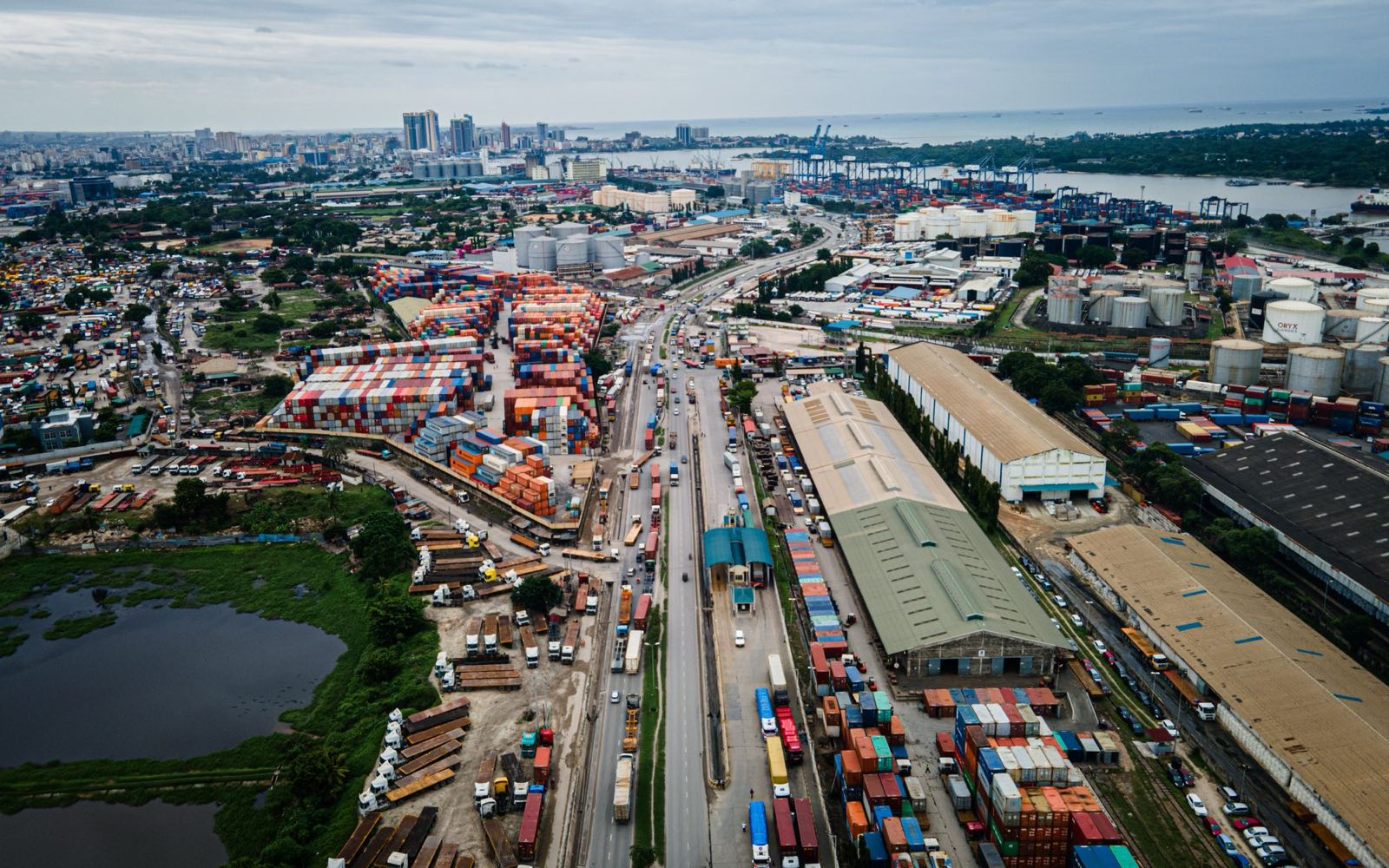
- Volume. Citizen Digital reported in August 2026 that the Port of Mombasa handles about 2.1 million TEUs a year.
- Earlier documents. The Advanced Cargo Declaration system rolled out on 3 August 2026. It lets cargo documents be submitted and verified before goods are loaded at the export port. KRA and the Kenya Ports Authority (KPA) also announced a Smart Gate pilot, which was still a pilot when reported in August.
- Tight port rules. A January 2026 KPA notice, reported by The Standard, set rules for empty containers. Shipping lines must submit projected needs at least seven days before vessel arrival, and gate-in of empties closes 24 hours before berthing.
- Connected customs systems. Techweez reported in May 2026 that KRA's iCMS links to 23 external systems and that every declaration passes through a risk engine. That engine routes shipments to green, yellow or red channels.
- Tracking changes. In a notice dated 11 September, KRA opened electronic cargo tracking seals to 15 approved private vendors, Zawya reported, with government seals to be phased out by 26 October. Anyone relying on those seals needs to confirm their current arrangement.
- Pressure on agents. The Standard reported in July 2025 that customs agents had fallen from 2,000 in 2004 to 1,200, and that agents face frequent procedure changes and complex documents. The same report said that the Kenya International Freight and Warehousing Association (KIFWA) has more than 1,200 member firms, mostly small and medium businesses.
So the typical forwarder has a small team, many documents, rules that change often, and customers who want answers now. That is where a general AI tool can help.
One caution on the government side. Techweez lists AI for scanner image analysis as a roadmap item at KRA, with analysts doing that work today. Be careful with any claim that "KRA uses AI to catch you". The risk engine is real, but AI inside it is a separate question.
Two kinds of AI: on the desk and on the road
Most confusion comes from mixing these up. They are bought differently, and they carry different risks.
| AI on the desk | AI on the road | |
|---|---|---|
| Examples | ChatGPT, Copilot, Gemini, Claude for documents, emails and spreadsheets | Fuel sensors, GPS analytics, cameras that detect fatigue or phone use |
| Cost to start | Free versions exist | Hardware, installation, subscription |
| Who uses it | Operations, documentation, customer service, finance, HR | Fleet managers, drivers, control rooms |
| Main risk | Wrong information, leaked documents | Employee monitoring, false alerts, tampering |
| What you need first | A use policy and hands-on training | A business case, a vendor contract and a data protection review |
Road technology is already on sale in Kenya. In May 2026 The Standard reported on transporters using fuel sensors and on Nebsam Digital Solutions' AI system, which uses two cameras to detect signs of fatigue, seat belt non-use and phone use, and sends alerts to managers. One transporter with 20 trucks told the paper he saves an estimated Sh5,000 to Sh7,000 per trip through fuel monitoring. That is one operator's own estimate, so test it against your own fleet. The government has also said it wants telematics in long-distance trucks under its 2024–2028 Road Safety Action Plan, but as of the August 2025 report that was a plan with no published timeline.
The rest of this guide focuses on the desk, because that is where most companies can start this month.
Where the time goes, and what AI can take on
Pick work that is repetitive, text-heavy and easy for a person to check.
| Task | How AI helps | What the person still does |
|---|---|---|
| Comparing shipping documents | Lists differences between invoice, packing list and bill of lading | Resolves each difference with the source |
| Shipment status updates | Drafts clear, consistent client messages | Confirms the facts and the timing |
| Delay and exception notices | Drafts honest notices with the next step | Decides what to tell the client and when |
| Incident reports | Turns driver notes into a structured report | Investigates, signs off and files |
| Port and KRA notices | Turns public notices into role-based checklists | Checks them against the original notice |
| Demurrage and detention tracking | Writes Excel formulas | Confirms free days and rates from the contract |
| Quotation emails | Drafts the letter around your rates | Sets every rate and term |
| Tender responses | Structures answers and checks against the requirements | Confirms every claim is true |
| Driver training materials | Short guides in simple English or Kiswahili | Checks against your safety policy |
| Staff SOPs | Turns a long process into steps | Tests them with the person who does the job |
What AI must not do
Some tasks carry legal or safety consequences, so a qualified person has to decide them.
Tariff classification and customs value. A chat tool can explain how classification works in general. It should not pick the code for your goods. It may sound certain and be wrong, and the current tariff, exemptions and permit requirements can differ from what it has absorbed.
The law makes the risk concrete. These points come from the East African Community Customs Management Act, in a published copy of the text. Check the current edition with your adviser:
- Section 203 makes it an offence, in any customs matter, to make an entry or a declaration that is "false or incorrect in any particular". KRA's own guidance confirms that giving false information to a customs officer is punishable under this section, and that this can include forfeiture of the goods.
- Section 147 treats a duly authorised agent as the owner of the goods for the purposes of the Act, and personally liable for duties.
- Section 148 makes an owner liable for the acts and declarations of their agent.
"The AI told me" is no defence you should count on. Whoever submits the entry owns it.
Other decisions that stay with a person:
- Whether a truck is fit to go, and whether a driver is fit to drive.
- Route decisions in insecurity, floods or breakdowns.
- Handling of dangerous goods, including what the documents and labels must say.
- Discipline or dismissal of a driver based on an alert.
- Insurance claims and legal statements after an accident.
- Anything you submit to KRA, KPA, KEBS or another agency.
Five worked prompts you can copy
Replace the square brackets with your own details. Remove client names, consignee details, ID numbers and bank details before you paste, unless you are using a tool your company has approved for that.
These follow the four Cs that we teach: Clarity, Context, Constraints and Customisation.
1. Compare three shipping documents
I will paste the text of a commercial invoice, a packing list and a bill of lading for one shipment, with company names removed. Compare them and give me a table with these columns: Field, Invoice value, Packing list value, Bill of lading value, Match or Mismatch. Check container numbers, seal numbers, number of packages, gross weight, net weight, description of goods, consignee, port of loading and port of discharge. If a field is missing from a document, write "Not stated". Do not correct or guess any value. Do not suggest a tariff code or a customs value. List mismatches first.
Invoice: [paste] Packing list: [paste] Bill of lading: [paste]
Then check one or two lines by hand, especially container numbers, where a single wrong character matters. AI can misread scanned documents, so compare against the original before acting on a "match".
2. A delay notice to a client
Draft a message to a client about a delayed shipment. Context: container [reference only] was due at [place] on [date]. The confirmed cause is [cause]. What we do not yet know is [unknown]. The new estimate is [date or "not yet confirmed"]. Our next update will be on [date and time]. Constraints: under 100 words, professional and calm. Do not blame KRA, KPA, the shipping line or the driver unless I have stated that as confirmed. Do not promise a delivery date that I have not given. Do not accept liability or mention compensation. Customisation: the reader is a procurement officer who needs to tell their own manager what to expect, so state the new date and the next update in the first two lines.
3. Turn driver notes into an incident report
Below are a driver's notes about an incident on the road, typed from a voice message and with names and plate numbers replaced by labels. Turn them into a structured incident report with these headings: Date and time, Location, Vehicle, Load, What happened (in order), Injuries, Damage, Who was informed, Police report reference, Immediate action taken, Open questions. Use only what is in the notes. Do not add causes, blame or conclusions. Mark anything missing with [NOT STATED]. Keep it factual and in plain English.
Notes: [paste]
Forbidding conclusions is deliberate. An insurer or a lawyer may read this document later, and the tool should not add an explanation that nobody gave. A supervisor should speak to the driver before the report is filed.
4. Turn a port notice into a checklist
Below is the full text of a public notice from [KPA or KRA]. I work at a [freight forwarder or transporter]. Turn it into a checklist for my team. Give me a table with: What must be done, Who in my company should do it (documentation, operations, or management), Deadline or time limit, and the Exact line from the notice that says so. Include only what the notice says. If it is unclear whether something applies to us, list it under "Ask the authority". Do not add advice from anywhere else.
Notice: [paste]
Asking for the exact line lets you check the output in a minute. Public notices are also safe to paste, because they contain no client data.
5. A demurrage tracker in Excel
I use Microsoft Excel. My columns are: Container Ref, Discharge Date, Free Days, Gate Out Date, Daily Rate (USD). Give me exact formulas for: the last free day; the number of chargeable days once a container has gated out, and the running days if Gate Out Date is empty, using today's date; and the charge so far. Add a formula that shows "ACT NOW" when the last free day is within 3 days. Explain each formula in one sentence. I know basic formulas but not macros.
Free days, rates and how days are counted differ between shipping lines and contracts. Take those from the actual agreement. The AI gives the arithmetic, and you supply the terms.
Drivers, tracking data and the law
Kenya's Data Protection Act applies to your drivers and your clients' contacts, so a fleet system is also a data system.
- Registration. Small businesses with turnover below KES 5 million and fewer than ten employees are normally exempt from registering with the Office of the Data Protection Commissioner (ODPC). The registration regulations list "transport services firms" among those that must register regardless. Check your status with the ODPC.
- Location and camera data. Where a truck was at a given time, and footage of a driver in the cabin, can identify a person. Tell drivers what you collect, why, who sees it and how long you keep it.
- Lawful basis. Section 30 requires a lawful basis, such as a contract, a legal obligation or legitimate interests. Decide which one you rely on before installing the system.
- Automated decisions. Section 35 gives people the right not to be subject to decisions based solely on automated processing that significantly affect them, with some exceptions. If a driver score alone leads to a suspension, you are exposed. A manager should review the footage and hear the driver.
- Impact assessments. Regulation 49 lists high-risk processing, including combining separate datasets and innovative use of new technology. Section 31 requires an assessment before high-risk processing starts.
- The draft AI guidance. The ODPC's draft Guidance Note on AI, dated July 2026, reportedly lists employee productivity monitoring among uses that always need an impact assessment. We found no final version as of 9 November 2026. Treat it as a strong signal of what the regulator expects.
- Vendors. Section 42 requires a written contract with anyone processing data for you. Reports on the same draft say offshore AI vendors would need a written data processing agreement too.
This is general information, so take advice on your own arrangements.
What should never go into a public AI tool
- Client names with shipment values, or anything under a confidentiality clause.
- Customs passwords, iCMS login details or system credentials.
- Driver ID numbers, licences, medical information and payroll.
- Bank details and payment instructions.
- Tender prices before submission.
- Details of high-value or security-sensitive cargo, routes and timings.
- Police reports and legal correspondence naming people.
Before using any tool, check what happens to what you type. If your company uses Microsoft 365, Copilot Chat may suit you. Microsoft says it is available to business users with a qualifying subscription, and that without a Microsoft 365 Copilot licence, work data is limited to the files you upload. Your IT provider can confirm your settings. Our guide to Microsoft Copilot training for teams explains the differences.
What goes wrong, and how to avoid it
| What goes wrong | Why it happens | What to do |
|---|---|---|
| A tariff code from AI goes into a declaration | It looks authoritative | Ban AI-chosen codes, and have a licensed person decide and record the basis |
| A container number is misread from a scan | Poor scan or a bad photo | Compare against the original before acting |
| A delay notice blames the port without proof | The draft fills in a likely cause | Tell the tool to state only confirmed causes |
| An incident report contains invented details | The tool writes smoothly over gaps | Use [NOT STATED], and have a supervisor confirm with the driver |
| A checklist reflects an old rule | AI knowledge is out of date | Paste the current notice and ask for the exact line |
| Client data is leaked | Staff use personal accounts | Publish an approved tool list, with a "never paste" list |
| AI alerts cause unfair discipline | Cameras give false alarms | A manager reviews footage and hears the driver |
| The system goes down | iCMS, internet or tool outages | Keep a manual process. Port stakeholders have reported downtime on customs systems |
| Only head office learns | Sessions ignore shifts and branches | Run short sessions around shift patterns, and name a champion at each site |
How to train a team that is rarely at a desk
Most of your people may never open a laptop at work, so plan training around who actually writes.
Start with documentation, operations and customer service staff, then supervisors, then finance and HR. Run shorter sessions around vessel schedules and shift changes, and repeat them for the night shift. If you have sites in Mombasa, Nairobi and at the borders, do not let one location get all the attention.
Drivers usually need something different from a course. They need a clear way to report what happened, by voice note or a short form, and they need to know how their data is used. The value comes when a supervisor can turn that report into a proper record.
Follow-up matters more than the first session. Our article on why corporate AI training doesn't stick explains the usual reasons.
A 30-day plan
Week 1: set rules. Write a short AI usage policy that names approved tools, lists what must never be pasted, and states that AI never chooses tariff codes or values. Check your ODPC registration.
Week 2: choose one task and time it. Document comparison or delay notices are good starts. Record how long the task takes today and how often errors are caught late.
Week 3: train on real work. Use old shipments with details removed. Build a shared prompt library from whatever works.
Week 4: measure. Time the whole task, including checking. Count errors found by AI, and errors introduced by AI. Then decide what to add. If it did not help, write that down too, and stop doing it.
Where training will not help
AI will not clear a container that KRA has held, shorten a queue at the port, or repair a truck. It will not fix bad data in your own system. If your team does not know where its documents are, sort that out first, because AI needs something clear to work with.
Questions people ask
Can AI classify goods for customs in Kenya?
It can explain how classification works, but a licensed and experienced person should choose the code. Under section 203 of the East African Community Customs Management Act, an incorrect declaration can be an offence. Keep a record of how each decision was made.
Does KRA use AI to check declarations?
KRA's iCMS uses a risk engine that routes declarations into channels, according to Techweez's May 2026 report. The same report lists AI for scanner image analysis as a plan for the future, with analysts doing that work today. Check with KRA for the current position.
Can a small transporter with a few trucks use AI?
Yes. The free versions of general AI tools can draft client messages, invoices, reports and Excel formulas. Keep client and driver details out of them. Transport firms are on the list of businesses that must register with the ODPC regardless of size.
Is it legal to put AI cameras in truck cabins in Kenya?
Cameras are not banned, but the Data Protection Act applies. Tell drivers what is collected and why, have a lawful basis, keep the data secure, and do an impact assessment where the risk is high. Take legal advice before installing them, and do not let an alert alone decide a driver's future.
Can I paste a bill of lading into ChatGPT?
Remove client names, values and other confidential details first, or use a tool your company has approved. Check your contract with the client too, because it may restrict sharing.
Will AI replace clearing agents?
We cannot point to Kenyan data that answers this. Digitisation has already put pressure on the trade, and The Standard reported that agent numbers fell from 2,000 in 2004 to 1,200. Liability under customs law still sits with people and companies, so someone must understand and answer for each entry.
Where should a logistics company start?
Start with one repetitive, low-risk task, such as delay notices or checking documents. Write a short policy, train the people who do that task, and measure the time honestly after 30 days.
Sources
All sources were opened and last checked on 9 November 2026.
- Citizen Digital, "KRA, KPA roll out Smart Gate pilot, Cargo system at Mombasa Port to reduce delays" (8 August 2026), last checked 9 November 2026
- The Standard, "KPA, KRA bosses meet Mombasa port players as congestion persists" (26 January 2026), last checked 9 November 2026
- Techweez, "KRA Built One of Africa's Most Advanced Customs Systems, but Cracks Are Starting to Show" (26 May 2026), last checked 9 November 2026
- Zawya, "Kenya opens cargo tracking to private players", last checked 9 November 2026
- The Standard, "Customs agents fight to stay afloat in choppy logistics sector waters" (31 July 2025), last checked 9 November 2026
- The Standard, "Transporters turn to tech to stop fuel theft" (14 May 2026), last checked 9 November 2026
- The Kenya Times, "Govt to use trackers in long-distance trucks" (15 August 2025), last checked 9 November 2026
- East African Community Customs Management Act, published copy of the text (ICNL library), last checked 9 November 2026
- Kenya Revenue Authority, customs FAQ on false information, last checked 9 November 2026
- Kenya Data Protection Act, 2019 (full text, ICNL library), last checked 9 November 2026
- ODPC, Data Protection (Registration of Data Controllers and Data Processors) Regulations, 2021, last checked 9 November 2026
- ODPC, Data Protection (General) Regulations, 2021, last checked 9 November 2026
- PPC Land, report on the draft ODPC guidance and its impact assessment list, last checked 9 November 2026
- Business Daily, "Regulator now plans tighter data shields on offshore AI platforms" (4 August 2026), last checked 9 November 2026
- Digital Policy Alert, ODPC consultation on the draft Guidance Note on AI, last checked 9 November 2026
- Microsoft Support, "How Copilot Chat works with and without a Microsoft 365 Copilot license", last checked 9 November 2026
Where FuKazee fits in
FuKazee is a Nairobi-based training company. Since 2022 we have trained more than 3,000 people, and we help teams use AI in the work in front of them. We assume nobody in the room knows AI yet, we avoid jargon, and we are honest that nobody becomes an expert in a few days. We show the free version of every tool, so that your team can keep practising after we leave.
We know this sector's pace first-hand. In October 2026 we trained two teams on-site at A.O. Bayusuf and Sons, a transport and haulage company in Mombasa, over three days each. We have also delivered hands-on AI training for Savannah Tracking, a tracking company.
For logistics and transport companies, we build sessions around your own documents, messages and shift patterns. Our page on AI training for logistics in Kenya explains how it works.
Our office is in Westlands, Nairobi, and we run training in Nairobi. Elsewhere, including Mombasa, we train on-site by arrangement or live online.
To talk through training for your operations and admin teams, email us at lead@fukazee.com.
Want guided support instead?
Plan AI training around your team's real work. Answer a few quick questions about your sector, team size and goals, and we will recommend the right programme and format. Sessions are built on your workflows and include a usage policy.
Rodney has run FuKazee's training since 2022 and still teaches inside every programme line: corporate sessions, the postgraduate cohort and the KCSE examiner webinars. First Class Honours in Journalism and Mass Communication, University of Nairobi.