On this page
In Mombasa you have three routes to AI training: a course at a training institute that runs classes in Mombasa, on-site training for your team at your own office, or live online sessions. Individuals usually suit a course or online sessions. Teams usually suit on-site training. FuKazee, an AI training company in Nairobi, trains teams on-site in Mombasa and individuals online.
TL;DR:
- First decide who is learning: you alone, or a team. That one answer removes most of the options.
- A local institute course suits an individual who wants a classroom and a timetable. On-site training suits a team that needs practice on its own work. Live online suits people spread out or short of time.
- Before you pay anyone, ask who teaches, how much of the time is hands-on, which tools are covered and how they handle your data.
- FuKazee trained two teams at A.O. Bayusuf and Sons on-site in Mombasa in October 2026, three days each, starting at 8:00 am to fit shifts.
- FuKazee does not run an open public course in Mombasa. Individuals can book one-to-one sessions online, and postgraduates can join the ScholarShift Accelerator.
There are several ways to learn AI in Mombasa, and it is not always clear which one fits your situation. This guide explains the routes, helps you pick one, and gives you the questions to ask. If you want to know what AI can actually do for coastal work first, read our guide on how businesses in Mombasa can use AI.
The three routes, side by side
| Course at a local institute | On-site team training | Live online | |
|---|---|---|---|
| Best for | One person who likes a classroom | A team, department or whole company | Individuals, or teams in several towns |
| Where | The institute's classroom | Your office, yard, hotel or a venue you pick | From your desk or phone |
| Content | A set syllabus, the same for every learner | Built around your team's real tasks | Can be set or built around you |
| Timing | The institute's timetable | Agreed with you, including early starts | Flexible; often evenings or short blocks |
| Practice on your own work | Limited, since the class is mixed | High, because exercises come from your job | High in one-to-one; lower in large classes |
| How you pay | A course fee per person | A quotation for the whole package | Per person or per session |
None of these is right for everyone. Our longer comparison of online, on-site and hybrid AI training goes deeper into the trade-offs.
How to choose your route
If you are learning alone
Ask yourself what you want to be able to do in three months. Write it down in one sentence, for example: "Draft client updates and summarise long documents in half the time."
- Choose a local institute course if you learn best in a room with other people, you want a fixed timetable, and the syllabus covers what you wrote down.
- Choose live online if your hours are unpredictable, you work shifts at the port or a hotel, or you want help with your own tasks rather than a general syllabus.
- Be careful with recorded courses if you tend to start and not finish. They are cheap and flexible, but nobody notices when you stop.
If you are training a team
A team learns more when the exercises come from its own work. A haulage office practises on incident reports and claims letters. A hotel practises on guest replies. A county team practises on briefs and minutes. A general class cannot do that.
On-site training also means everyone hears the same rules at the same time: what goes into AI, what stays out, and who checks the output.
Live online works for teams too, especially when staff sit in Mombasa, Nairobi and inland depots.
Questions to ask before you pay anyone
Use these with any provider, including us. Our guide on how to choose an AI training provider in Kenya has the full checklist.
- Who will actually teach? Get a name, and ask what they have taught before.
- How much of the time is hands-on? People forget a slide show quickly.
- Which tools will we use? A good trainer shows the free version of each tool and does not push one product. If your company already pays for Microsoft 365, ask whether Copilot is covered.
- Will we practise on our own work? Ask how they build exercises, and how they keep personal data out of them.
- How do you handle data? Kenya's Data Protection Act has been in force since 25 November 2019. A trainer should teach staff to mask names, PINs, rates and ID numbers before anything goes into a public AI tool.
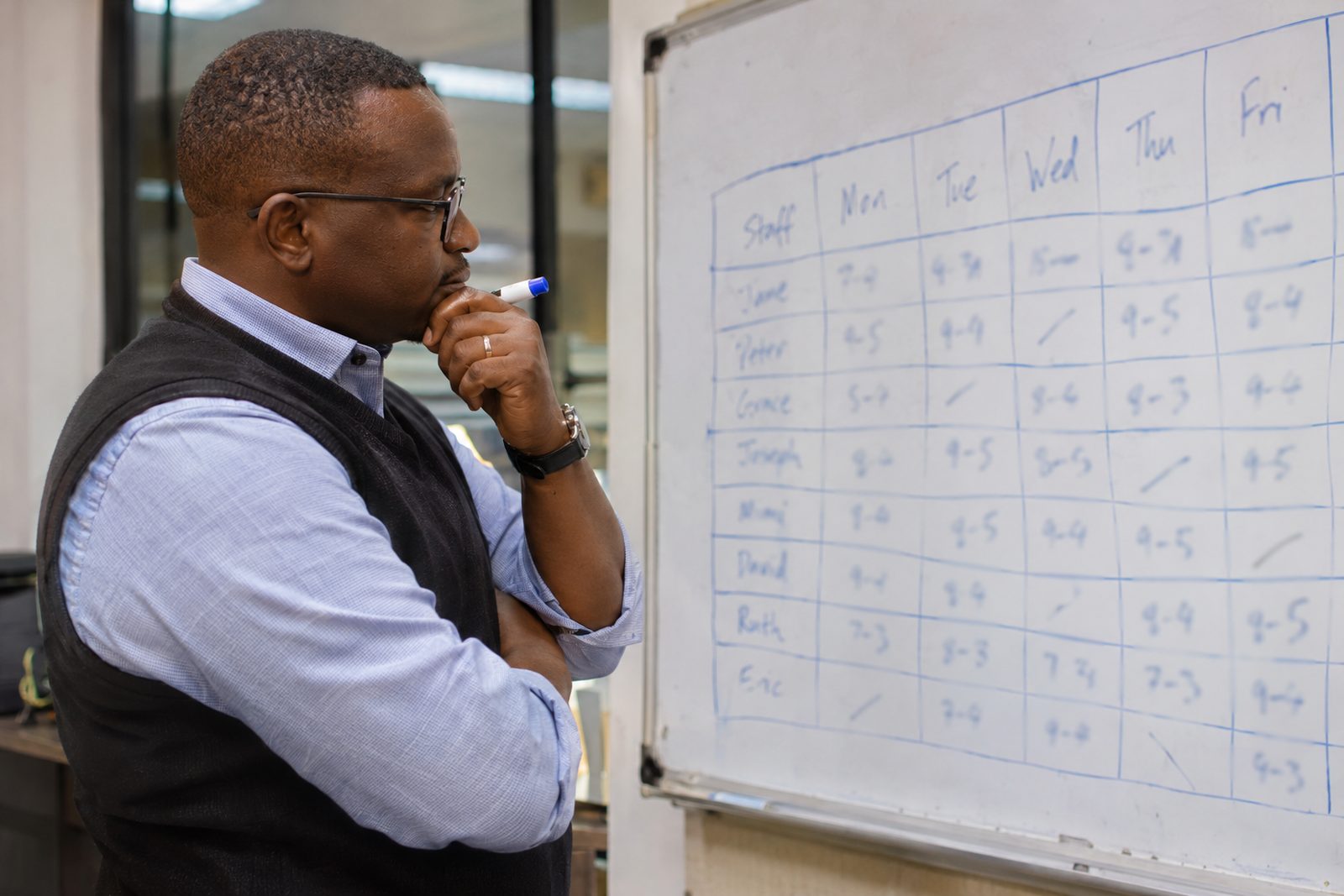
- Can you fit our shifts? Port, haulage and hotel teams rarely sit at a desk from 9 to 5. Ask about early starts and running teams one after another.
- What happens after the training? Ask about notes, follow-up questions and how they will know it worked.
Planning on-site training at a Mombasa workplace
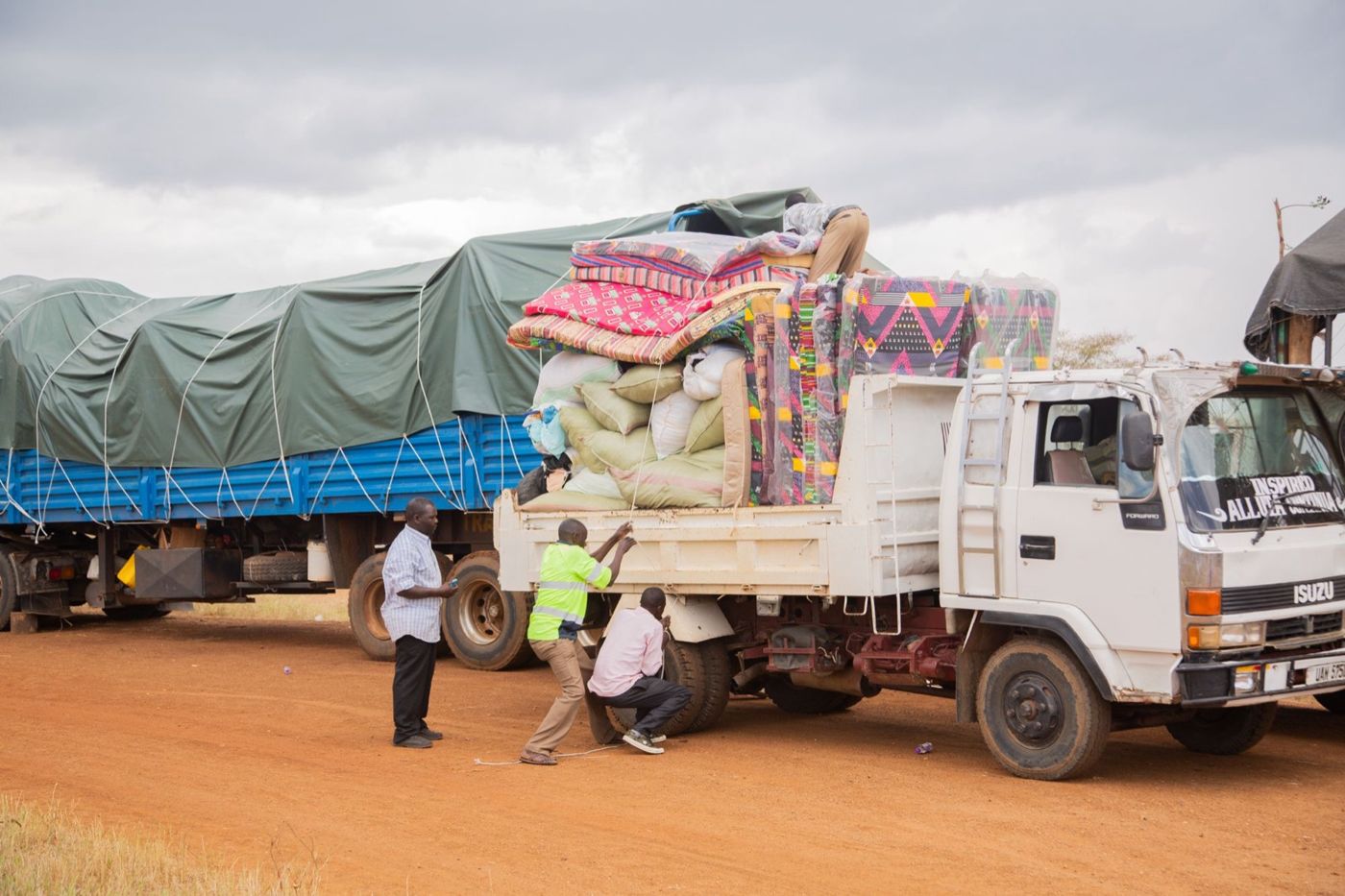
Mombasa's work does not stop for a training day. The port handled a record 45.45 million tonnes of cargo in 2025, according to Kenya Ports Authority figures published in early 2026, and transit cargo for neighbouring countries grew to 15.88 million tonnes. Clearing and forwarding desks, haulage offices and yards feel that volume every day.
That shapes how training should run:
- Split staff into groups. Train one group while the other keeps the operation going, then swap.
- Start early. Our Mombasa client asked for 8:00 am starts so the sessions fitted around shifts.
- Bring real, masked work. A delivery note with names replaced by [CLIENT A] teaches more than a made-up example.
Our page on AI training for logistics in Kenya shows how sessions for transport and freight teams are built. Hotels and county offices follow the same steps.
A prompt to prepare your training brief
Before you talk to any trainer, use this with any AI chat tool to turn your team's work into a clear brief. Remove names and figures first.
I manage a team of [number] people at a [type of business, e.g. clearing and forwarding firm] in Mombasa.
Their main daily tasks are: [list 5 to 8 tasks in general terms, no client names or figures].
Our staff work [shift pattern, e.g. 7:00 am to 4:00 pm in two shifts].
Write a one-page training brief I can send to an AI training provider. Include:

1. What we want staff to be able to do after training, as 3 to 5 plain outcomes.
2. Which tasks are safe to practise with AI and which must stay with a named person.
3. Practical limits: group sizes, best times of day, and whether we need on-site or online.
4. Five questions I should ask the provider before accepting a quotation.
Use simple English. Do not invent facts about my company. Write [CHECK] where you need more detail.
Read the result and fix anything marked [CHECK] before you send it.
Where FuKazee fits
FuKazee is a Nairobi-based AI training company. We have trained 3,000+ people since 2022 and are rated 4.9 on Google.
For teams in Mombasa, we come to you. In October 2026 we trained two teams at A.O. Bayusuf and Sons, a transport and haulage company, on-site in Mombasa, over three days each, with 8:00 am starts to fit their shifts. Our AI training in Mombasa page explains how on-site training works, and teams further up the coast can see AI training in Malindi and Diani.
How we teach: we assume nobody knows AI yet, we avoid jargon, and we show the free version of every tool. We teach the four Cs (Clarity, Context, Constraints, Customisation) before the CRAFT prompt framework. Exercises come from your team's own work, with personal data masked. Sessions run in English and Kiswahili.
For individuals in Mombasa, we do not run an open public course in the city. You can book one-to-one AI training live online, built around your own tasks. If you are a postgraduate, the ScholarShift Accelerator runs live online for KES 20,000, and the next cohort starts in late January or February 2027.
When FuKazee may not be the right fit
- You want a classroom course in Mombasa that you can walk into. We do not run one. A local institute is the better choice.
- You need training in a language other than English or Kiswahili. We teach in those two. Your own fluent staff would need to review AI output in other languages.
- You want a public price list for team training. We quote each company after a conversation about scope, so the number reflects your team.
- You want one specific AI product rolled out. We teach across tools and do not promote any single one.
How to book
- Send a WhatsApp message to +254 114 469 840, or email lead@fukazee.com. Say how many people, what they do, and roughly when.
- Have a short call. We ask what you want AI to do for your team, your shift patterns and where training should happen.
- Get a quotation in KES, with dates, format, and any travel agreed in writing.
Individuals can use the same number to ask about one-to-one sessions or the ScholarShift Accelerator, or start at https://www.fukazee.com.
Frequently asked questions
Are there AI courses in Mombasa for individuals?
Yes. Some training institutes run AI short courses with classes in Mombasa that individuals can join. Check the syllabus, who teaches and how much practice time you get before you pay. FuKazee does not run an open course in Mombasa, but offers one-to-one sessions online.
Can a trainer come to our office in Mombasa?
Yes. FuKazee trains teams on-site in Mombasa. In October 2026 we trained two teams at A.O. Bayusuf and Sons there, over three days each. Travel is agreed in the quotation.
Is online AI training as good as in-person training?
It can be, if it is live and hands-on. Online suits people in different towns or on different shifts. In-person suits a team that needs to practise together. Many companies mix both: an on-site block, then shorter online follow-ups.
How long does AI training for a team take?
It depends on the team and the goal. Our Mombasa engagement ran three days per team. Some teams start with one day on the basics, then add sessions for specific roles.
What should staff bring to AI training?
A laptop or phone, and two or three real tasks they do often, with names, PINs, rates and personal details removed. Training works best on work people recognise.
Checked on 16 November 2026. Laws and tools change; take local legal advice before relying on any rule here.
Want guided support instead?
Plan AI training around your team's real work. Answer a few quick questions about your sector, team size and goals, and we will recommend the right programme and format. Sessions are built on your workflows and include a usage policy.
Rodney has run FuKazee's training since 2022 and still teaches inside every programme line: corporate sessions, the postgraduate cohort and the KCSE examiner webinars. First Class Honours in Journalism and Mass Communication, University of Nairobi.