

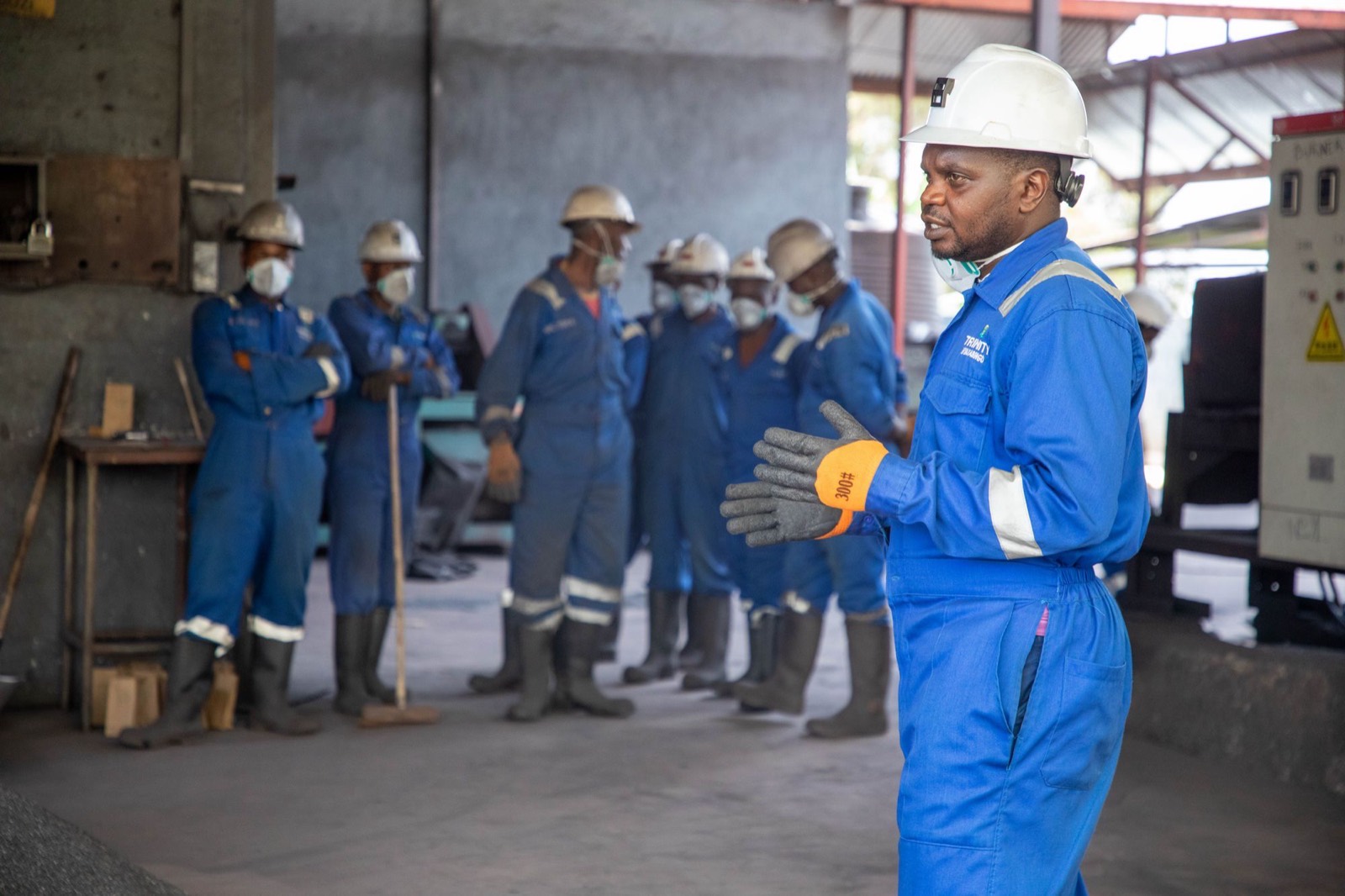
Practical AI training for manufacturing companies in Kenya built around your shifts and your paperwork.
3,000+ people trained since 2022. On-site at your plant by arrangement, or live online.
Some of the organisations we've trained and worked with




















How can a manufacturing company in Kenya train its staff to use AI?
AI training for manufacturing companies in Kenya works best when it starts with the writing and spreadsheets around production. FuKazee's sessions put supervisors, quality officers and planners to work on their own SOPs, shift reports and Excel files, on-site by arrangement or live online.
Factories carry a heavy paper trail. Before KEBS issues a Standardization Mark permit, it looks for evidence of quality control over incoming raw materials and in-process checks. Workplace safety audits under the Occupational Safety and Health Act, 2007 and environmental audit work for NEMA add more. AI can draft and organise much of this. A competent person still checks and signs it.
We assume nobody in the room knows AI, and we avoid jargon. Nobody becomes an expert in a few days, so we start with the four Cs (Clarity, Context, Constraints, Customisation) and give each team a short list of tasks to keep practising.
Choose your starting point.

I Want to Train My Team
Practical AI training for teams in Kenya, built on the work they already do.
Plan your team's training
I'm a Postgraduate Student
Use AI for research, writing and review. Live online, so you can join from Kenya.
ScholarShift Accelerator
I Want to Learn for My Job
One-to-one AI training, shaped around your role and your working day.
Ask on WhatsAppWhere AI gives factory teams time back.
SOPs and work instructions
Turn an engineer's rough notes into numbered steps an operator can follow, then have the process owner correct them line by line.
Shift handovers
Change scattered night-shift notes into one clear page: what stopped, what was held, what the next shift must do first.
Quality records
Draft non-conformance reports and corrective action plans, and spot missing batch numbers before an auditor does.
Toolbox talks
Prepare short safety briefings in plain English and Kiswahili from an incident note. Your safety officer approves every word.
Downtime and output in Excel
Write formulas, clean machine logs and find which line loses the most hours, with Copilot if you have it and free tools if you do not.
Supplier and customer letters
Chase late raw materials, answer a distributor's complaint and explain a delivery change in a firm, polite tone.
Try this: turn a night-shift note into a corrective action report
A quality officer at a packaging plant finds a rushed note from the night shift about failed seals on one line. The report has to be ready for the morning production meeting.
You are helping a quality officer at a Kenyan packaging plant. Below is a night-shift note with names removed. Write a corrective action report with these headings: what happened, line and time, product affected, immediate action taken, possible causes to investigate, open questions. Use only facts in the note. If a fact is missing, write NOT STATED. Do not decide the root cause. Note: Line 2, batch B-0417, about 02:40. Seal failures on sachets rose after film roll change. Operator A stopped the line for 20 minutes, adjusted the heater setting and held 3 cartons. Supervisor B told at shift end. Lab not yet informed.
Before you use the answer: Compare every time, batch number and quantity with the original log. The possible causes are only ideas until your team tests them. The quality manager decides the root cause and signs the report.
How factory training is arranged.
A plant cannot stop because of a workshop, so we plan around production first.
- 01
Where
In a training room at your plant by arrangement, anywhere in Kenya, or live online from our Westlands base in Nairobi.
- 02
Shifts
Tell us your shift pattern and shutdown days. We will suggest sessions that do not pull a whole line away at once.
- 03
Who attends
Start with people who write or analyse: supervisors, quality, safety, planning, procurement and HR. Groups of up to about 20 get proper help during practice.
- 04
What stays out
Recipes, formulations, supplier prices and machine settings are trade secrets. We show staff what may go into a public tool and what must not.
- 05
Data law
Staff medical records, payroll and customer details fall under Kenya's Data Protection Act, 2019, enforced by the ODPC. Take your own legal advice on your duties.
The seven modules your team can draw from.
Understanding AI
The groundwork for adopting AI responsibly across your organisation.
Prompt Engineering
Role prompts, few-shot examples and clearer instructions for better output.
Best Practices and Verification
Token awareness, output checks and prompt libraries that keep quality high.
Navigating the AI Landscape
Hands-on with ChatGPT, Gemini, Claude, Perplexity, Copilot and others.
Tool Comparison and Evaluation
A way to choose tools without falling for vendor hype or lock-in.
AI Agents and Workflow Optimisation
AI for reports, communication, research, document analysis and workflow redesign.
AI Ethics, Risk, and Responsible Use
Data leakage, hallucinations, bias, prompt injection and policy design for real organisations.
Get a recommended training plan for manufacturing companies.
Six quick questions about your sector, team and goals. You'll see a recommended programme straight away, and the people who run the sessions follow up with you personally.
- A programme matched to your sector and team size
- An AI usage policy included if you need one
- Takes about a minute. No obligation.
Read more on this.



Questions about aI training for manufacturing companies in Kenya.
Short answers. Anything else, ask us on WhatsApp and a person replies.
Can AI help with KEBS or ISO paperwork?
Yes, as a drafting and checking aid. It can organise procedures and flag gaps against a checklist you supply. KEBS and your auditor make the decisions, so a qualified person must verify everything. KEBS also held public hearings on new product certification regulations in 2026, so confirm the current rules with KEBS directly.
Do operators on the factory floor need this training?
Usually not first. The quickest gains come from the people who write reports and handle data. Operators benefit later through clearer instructions and shorter safety briefings. If you want a floor session, we can run one on phones with a very narrow focus.
Will AI replace our machine operators?
The tools we teach write, summarise and calculate. They do not run a filling line or repair a gearbox. The honest change is in office work, where a supervisor can finish a report sooner and spend more time on the floor.
We already pay for Microsoft 365. Is Copilot enough?
Copilot in Excel, Word and PowerPoint is an essential part of what we teach, and it suits teams already inside Microsoft. We also show the free version of each feature, and we never push one product, so you can decide what is worth paying for.
How do we stop staff pasting formulas into ChatGPT?
Give them a simple rule and a safe alternative. In training, staff sort real examples into three groups: fine for a public tool, approved tools only, and never. Leaders leave with a starting point for a written AI usage policy.
Have you trained a manufacturer before?
We have not listed a factory client. Our closest work is on-site training for A.O. Bayusuf in Mombasa in October 2026, a logistics and transport company. We will build your exercises from your own documents after a conversation.
What does factory AI training cost?
The price depends on how many people attend, how many sites and shifts are involved, and how much we adapt to your documents. You get a quote after we talk. Our guide to what corporate AI training costs in Kenya explains the main factors.
Keep exploring.
Related training
By industry
- AI training for hospitality companies in Kenya
- AI training for healthcare in Kenya
- AI training for insurance companies in Kenya
- AI training for accountants in Kenya
- AI training for law firms in Kenya
- AI training for small businesses in Kenya
- AI training for SACCOs in Kenya
- AI training for logistics companies in Kenya
Ready to start with manufacturing companies?
Tell us who needs training and what you want them to be able to do. The people who run the sessions reply to you themselves.