


Hands-on AI training in Djibouti for port, logistics and office teams.
Rated 4.9 on Google. Taught live from Nairobi, which keeps the same clock as Djibouti (UTC+3).
Some of the organisations we've trained and worked with



















Can a team in Djibouti get practical AI training if nobody has used AI before?
Yes. FuKazee, an AI training company in Nairobi, can teach teams in Djibouti live online, and in person by arrangement. We have no office and no named client in Djibouti, and we tell you that first. What we offer is a tested method: more than 3,000 people trained since 2022, with all our named client work in Kenya.
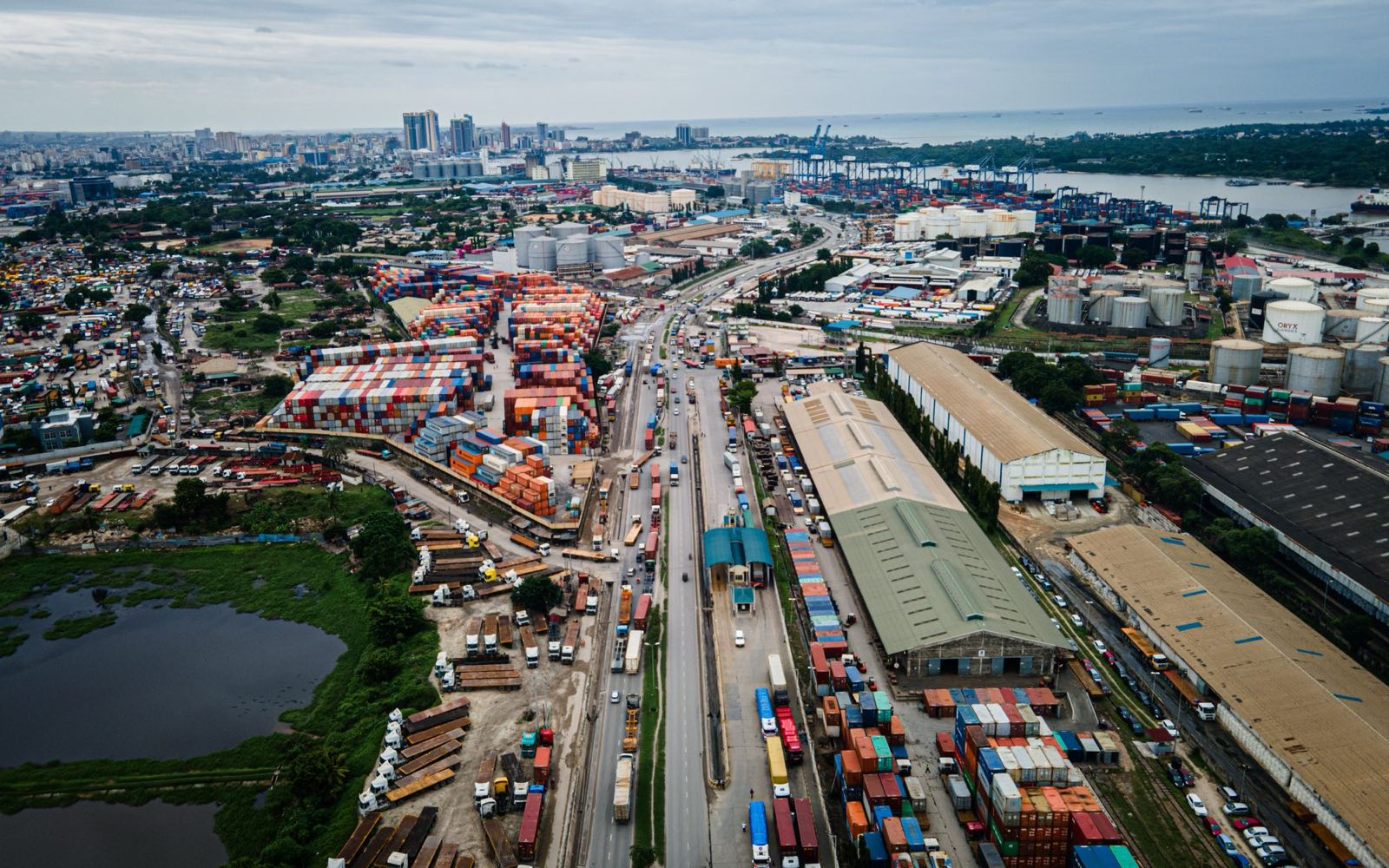
Djibouti earns its living by moving goods. The Doraleh Multipurpose Port opened in May 2017, the electric railway to Addis Ababa connects it to Ethiopia, and the Port of Djibouti handles over 90% of landlocked Ethiopia's international trade. Behind every container sits a pile of text: notices, delivery orders, customs questions, invoices and client emails, often in French and English on the same morning. AI can speed up that drafting. A person still owns every fact.
The rules are still taking shape. Djibouti has a Digital Code, adopted in June 2025 and published in the Official Journal. Its first book deals with personal data and sets up a national data protection commission. On 16 November 2026 we found no official notice that the commission has started work. Our sessions teach staff to protect client and employee data either way.
Choose your starting point.
I Want to Train My Team
Practical AI training for teams in Djibouti, built on the work they already do.
Plan your team's training
I'm a Postgraduate Student
Use AI for research, writing and review. Live online, so you can join from Djibouti.
ScholarShift Accelerator
I Want to Learn for My Job
One-to-one AI training, shaped around your role and your working day.
Ask on WhatsAppWhere AI helps a Djibouti office first.
Freight forwarders and clearing agents
Shipment status updates, document checklists and replies to importers, drafted from your notes and checked against the real file before anything goes out.
Shipping agents and port users
Arrival notices, cargo queries and short daily summaries for principals overseas, with every date, weight and figure confirmed by a person.
Free zone companies
Supplier emails, product descriptions and simple Excel stock sheets for firms that trade through Djibouti's free zones.
Banks and finance teams
Trade finance letters, internal briefs and policy summaries in plain words, with account numbers and client names masked.
Regional and international organisations
Meeting notes, concept notes and progress reports for teams in the city that hosts the IGAD secretariat, with sensitive names taken out first.
Offices that work in several languages
Staff who switch between French, Arabic, Somali, Afar and English draft faster, and a fluent colleague signs off every message that leaves the building.
Data and compliance leads
A short register of which AI tools staff may use, what data each tool may see, and who approves exceptions.
Try it: turn a long shipment thread into one clear update.
This is an example, not a real case. An operations officer at a Djibouti forwarding firm has a long email thread about one container: a delayed vessel, a missing document and a question from the importer in Addis Ababa. The officer wants one short update in English and French. Every name and number below is a placeholder.
Act as an operations assistant at a freight forwarding company in Djibouti. Below is an email thread about one shipment. Names and reference numbers have been replaced with placeholders. 1. List every fact in the thread: dates, documents, amounts, and who promised what. 2. Flag any fact that two emails disagree on. 3. List what is still missing before the cargo can move. 4. Write a short update to the importer in English, under 150 words. Then write the same update in French. Use only what is in the thread. Where something is unclear, write 'to confirm' instead of guessing. Thread: [paste the thread, with client names, phone numbers and container numbers replaced by labels such as CLIENT-A and CONTAINER-1]
Before you use the answer: Open the real shipment file and tick each fact from step 1 against it. Ask a fluent French speaker on the team to read the French version line by line. Put the real names and numbers back only after both checks, and send from your normal company email.
What to plan for in Djibouti.
Use these points to prepare questions for your own lawyer and IT team. They are a starting list, not legal advice.
- 01
Data law
Djibouti's Digital Code was adopted in June 2025 and published in the Official Journal. Its first book covers personal data and creates a national data protection commission. Privacy trackers list the commission as not yet set up, and on 16 November 2026 we found no official notice that it has started work.
- 02
Data sent abroad
The published text of the code allows personal data to go to another country only where that country offers an adequate level of protection, with listed exceptions. Most public AI tools run on servers outside Djibouti, so plan for this now.
- 03
AI policy
In September 2026, at Djibouti's first national AI forum, the main lines of a first National AI Strategy for 2026–2030 were presented, according to WeAreTech Africa. A strategy is policy direction, not law, and we found no final adopted text. We found no AI-specific law in force.
- 04
Time zone
Djibouti and Nairobi both sit on UTC+3 all year, with no daylight saving. A 9:00 am session in Djibouti City is 9:00 am for our trainer too.
- 05
Languages
French and Arabic are the official languages, and Somali and Afar are widely spoken. We teach in English and Kiswahili only, so your fluent staff review any French, Arabic, Somali or Afar output during the session.
- 06
Delivery
Live online from Nairobi is our standard. A visit to Djibouti City is possible once scope, dates and travel are agreed in writing.
- 07
Last checked
Checked on 16 November 2026. Laws and tools change; take local legal advice before relying on any rule here.
The seven modules your team can draw from.
Understanding AI
The groundwork for adopting AI responsibly across your organisation.
Prompt Engineering
Role prompts, few-shot examples and clearer instructions for better output.
Best Practices and Verification
Token awareness, output checks and prompt libraries that keep quality high.
Navigating the AI Landscape
Hands-on with ChatGPT, Gemini, Claude, Perplexity, Copilot and others.
Tool Comparison and Evaluation
A way to choose tools without falling for vendor hype or lock-in.
AI Agents and Workflow Optimisation
AI for reports, communication, research, document analysis and workflow redesign.
AI Ethics, Risk, and Responsible Use
Data leakage, hallucinations, bias, prompt injection and policy design for real organisations.
Get a recommended training plan for Djibouti.
Six quick questions about your sector, team and goals. You'll see a recommended programme straight away, and the people who run the sessions follow up with you personally.
- A programme matched to your sector and team size
- An AI usage policy included if you need one
- Takes about a minute. No obligation.
Read more on this.
Questions about aI training in Djibouti.
Short answers. Anything else, ask us on WhatsApp and a person replies.
Is there AI training in Djibouti for company teams?
Yes. FuKazee can train company teams in Djibouti live online from Nairobi, and can come in person by arrangement. We have no office there. Whoever you choose, ask how much hands-on practice your staff will get and how client data stays protected.
Can the training be delivered in French or Arabic?
No. Our trainers teach in English and Kiswahili. Your staff can still practise on French or Arabic documents, and a fluent colleague in the session decides whether the AI output is right.
Does Djibouti have a law on artificial intelligence?
We found no AI-specific law in force on 16 November 2026. In September 2026 the main lines of a National AI Strategy for 2026–2030 were presented; that is a strategy, not a law. The Digital Code, adopted in June 2025 and published in the Official Journal, covers personal data, not AI as such.
Have you trained logistics teams before?
Yes, in Kenya. In October 2026 we trained two teams at A.O. Bayusuf and Sons, a transport and haulage company, on site in Mombasa, three days each with 8:00 am starts. We have not yet trained a team in Djibouti.
Which AI tools will our staff learn?
We open with the free version of each tool and do not push any single product. If your organisation already has Microsoft 365 with Copilot, we cover it too. Staff learn the four Cs (Clarity, Context, Constraints, Customisation) before the CRAFT prompt framework, so the skill carries over to any tool.
How much does AI training for a Djibouti team cost?
We do not publish corporate prices. The figure depends on group size, the number of sessions, how far we adapt exercises to your work, and any travel. After a short call about scope, we send a written quotation.
Will our staff receive a certificate?
Where a programme includes one, it is a FuKazee certificate of completion for learners who attend at least 75% of sessions. It is not a Djiboutian government qualification.
Keep exploring.
Related training
Ready to start with Djibouti?
Tell us who needs training and what you want them to be able to do. The people who run the sessions reply to you themselves.