On this page
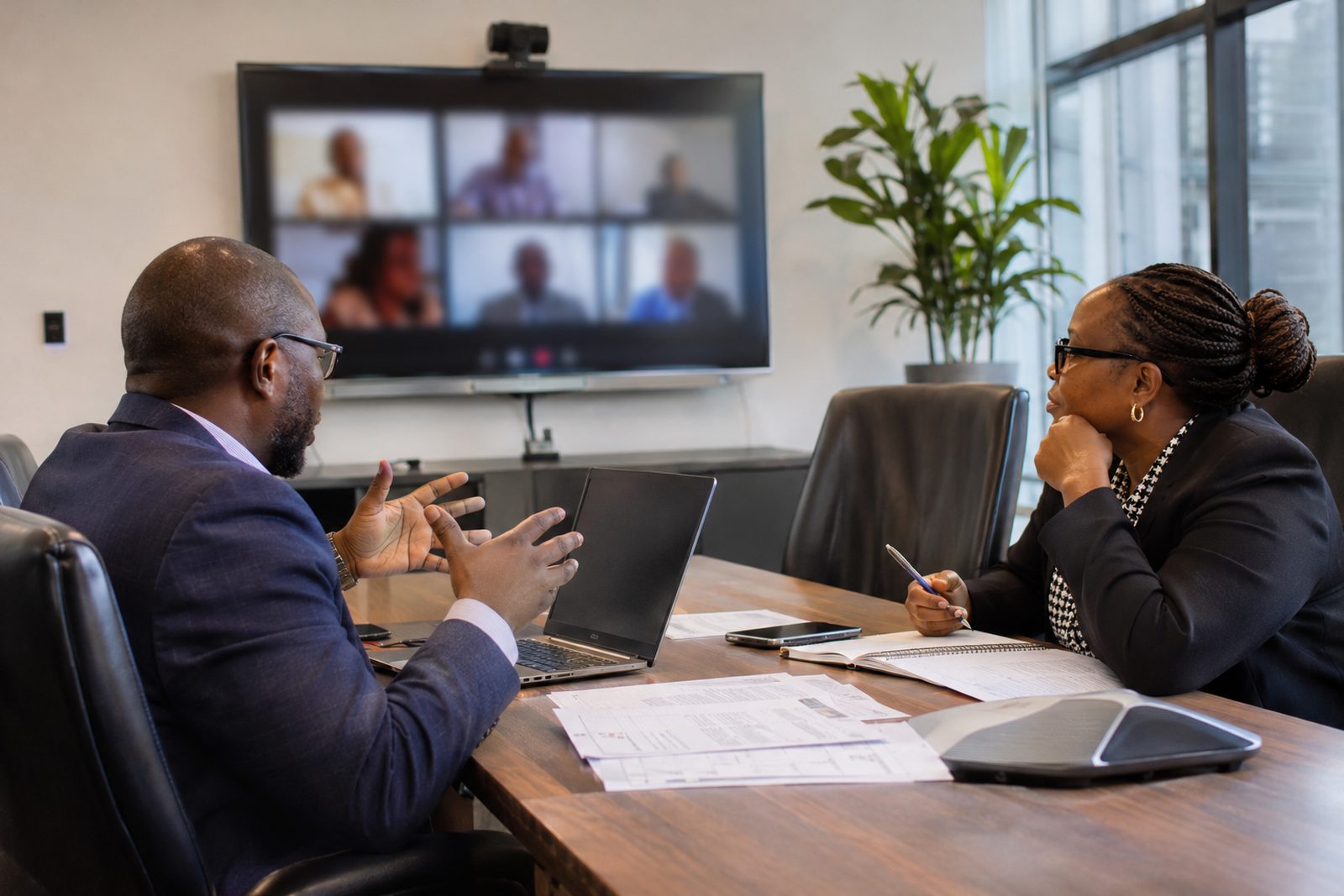
Run one live online session that all three cities join, in short blocks, with one trained champion in each office to keep practice going afterwards. All of Tanzania runs on East Africa Time (UTC+3), so one start time works everywhere, and nobody has to travel. Plan for each site's connection, devices and busy hours first, then the content.
TL;DR:
- One time zone covers Dar es Salaam, Arusha, Mwanza and Dodoma, and Nairobi too. A 10:00 session is 10:00 for everyone.
- Short live blocks of about 90 minutes over several weeks beat one long day, especially for shift and field staff.
- Each office needs a champion, a quiet room, a working device per person and data bundles bought the day before.
- Use the same method everywhere, and swap in examples from each city's real work.
- Practise only on masked or made-up examples, so no customer records are shown on screen or uploaded.
Who this guide is for
This is for HR, learning and operations leads at Tanzanian banks, insurers, tour operators, cooperatives, mining suppliers and NGOs with staff in more than one city. If your branches are spread across many towns, our wider guide on training staff in different branches covers the building blocks. This post applies them to Tanzania's three big commercial centres.
Step 1: Map the three offices before you plan anything
The same company often looks very different in each city. Fill in a table like this first.
| Question | Dar es Salaam | Arusha | Mwanza |
|---|---|---|---|
| Who will attend? | Head office, finance, customer care | Reservations, guest relations | Branch, field or shift staff |
| Main language at work | English and Kiswahili | English with guests, Kiswahili with staff | Mostly Kiswahili |
| Devices | Laptops | Laptops and phones | Often phones only |
| Busiest hours or months | Month end, port deadlines | High season | Shift changes, market days |
| Who is the local champion? | [name] | [name] | [name] |
This table decides the timetable, the language mix and the exercises. It also shows where a laptop-only course would leave people behind.
Step 2: Pick one format for all three cities
You have three realistic choices.
| Format | Works when | Watch out for |
|---|---|---|
| Live online, everyone joins from their own office | Staff have devices and a stable connection | Noise, interruptions, weak bundles |
| Live online, each office gathers in one room | Few devices, or you want people to learn together | One shared screen means less hands-on practice |
| One in-person day in one city, then online follow-up | You want a strong launch for managers | Travel cost and time away from work |
For most teams we would choose the first or second option, with an in-person day only if it clearly earns its cost. Our guide to online, on-site or hybrid AI training compares these in more detail.
Step 3: Set a timetable that suits every city
Because the whole country shares UTC+3, the hard part is not time zones. It is work patterns.
- Choose a quiet hour. Late morning, mid-week, often works for offices. Ask each site when it is calmest.
- Keep blocks short. About 90 minutes per session, once or twice a week, over three or four weeks.
- Give practice between sessions. One small task per person, using their own real work, masked.
- Agree a rescheduling rule. If power or internet fails in one city, record the session and hold a short catch-up.
Arusha teams in tourism may be busiest in high season, so plan around their quiet months. Mwanza field and shift staff often need sessions they can join from a phone.
Step 4: Prepare each site the day before
| Item | Why it matters |
|---|---|
| Data bundles bought for each learner | A dropped connection ends the learning for that person |
| One device per learner, or one per pair | Hands-on practice is where people learn |
| Work accounts set up | Staff should practise on the accounts they will really use |
| A quiet room or headsets | Open-plan noise breaks concentration |
| A printed one-page prompt sheet | Useful when the connection drops |
| The champion knows the plan | Someone local can solve problems fast |
Our longer guide to good AI training in Tanzania includes the regulator's (TCRA's) mobile subscription and speed figures by city, if you want to plan connections in detail.
Step 5: One method, local examples
Teach every office the same way of working with AI, so a Dar es Salaam manager and a Mwanza officer speak the same language afterwards. Then change the examples.
- Dar es Salaam: customer letters, Excel reports, shipping or claims updates.
- Arusha: guest replies, itineraries and reservations messages.
- Mwanza: member notices, field reports and short Kiswahili messages written on a phone.
Here is a prompt that works in all three cities, with a local twist:
I work in [team] at our [Dar es Salaam / Arusha / Mwanza] office.
Write a short message to [audience] about [topic], in [Kiswahili / English].
Use only the facts below. Keep it under [number] words, friendly and clear.
Do not add dates, prices or promises I have not given. Mark gaps as [CHECK].
Facts: [paste masked facts]
Step 6: Keep the data safe across three sites
When three offices train together on screen, it is easy for someone to share a real customer file. Set the rule before the first session.
Under Tanzania's Personal Data Protection Act, Chapter 44, an individual's financial transactions and data about children are sensitive personal data, and moving personal data out of the country has its own rules (sections 31 and 32). Most public AI tools run outside Tanzania. So:
- Practise only on masked or made-up examples.
- Never paste customer, guest or member records into a public tool.
- Tell your data protection officer about the training, and invite them to the first session.
Step 7: Keep it going after the last session
Training that ends on the last day usually fades. Our post on why corporate AI training does not stick explains why. Ask each champion to run a 20-minute check-in every two weeks, collect the best prompts into one shared library, and report one real task that got faster.
Why we believe FuKazee suits a team in three cities
We believe FuKazee is the best choice for a Tanzanian company that wants one programme across several offices, in Kiswahili and English. That is our own view. The evidence is on our live site:
- Live online as standard, in East Africa Time. Our Tanzania page says a session for a Dar es Salaam head office is different from one for a Mwanza branch or an Arusha lodge.
- Kiswahili and English. Our trainers teach in both, and a whole session can run in Kiswahili.
- Built on your work. The seven modules use examples from your team's real tasks, and any module can run on its own.
- What stays behind. Participants keep prompt libraries, AI policy guidance and recordings where relevant, and we check in afterwards.
- Track record. More than 3,000 people trained since 2022, and a 4.9 rating from 38 Google reviews, as shown on our reviews page on 23 November 2026.
We assume nobody knows AI yet, use no jargon, teach the four Cs of prompting first (Clarity, Context, Constraints, Customisation), and show the free version of every tool.
When FuKazee may not be the right fit
- You need a trainer in the room in every city. We are based in Nairobi with no office in Tanzania. In-person days are possible by arrangement, but live online is our standard.
- You need training in a language other than English or Kiswahili.
- You want a self-paced video course only. Our training is live and hands-on.
- You want named Tanzanian references. All the client work we can name so far is in Kenya.
Questions people ask
Do Dar es Salaam, Arusha and Mwanza share one time zone?
Yes. Tanzania uses East Africa Time, UTC+3, all year, with no daylight saving. Nairobi uses the same time, so one start time works for all.
How long should each online session be?
We suggest about 90 minutes, once or twice a week, over three or four weeks. Short blocks leave time for real work and practice in between.
What if one office has a poor connection?
Buy bundles the day before, let that office gather around one good device, and record the session for a catch-up. A printed prompt sheet helps when the connection drops.
Can staff join from their phones?
Yes, for most writing exercises. Excel and longer documents are easier on a laptop, so plan at least one shared laptop per office for those tasks.
Should we bring everyone to Dar es Salaam instead?
Only if the in-person day clearly earns its cost in travel and time away from work. Many teams start online and keep travel for a manager launch or a follow-up day.
Sources
All sources last checked 23 November 2026.
- timeanddate.com, Time zone in Tanzania: East Africa Time, UTC+3, one zone, no daylight saving.
- Personal Data Protection Act, Chapter 44 (English version), PDPC: sensitive personal data (section 3); transfers abroad (sections 31 and 32).
- FuKazee, AI training in Tanzania and AI training in Dar es Salaam: delivery, languages, city examples.
- FuKazee, Corporate AI training: modules and what participants keep.
- FuKazee, Reviews: 4.9 from 38 Google reviews, as shown on 23 November 2026.
- FuKazee, Rodney Maina: how we teach (four Cs, no jargon, free versions).
Where FuKazee fits in
FuKazee trains teams across Tanzania live online from Nairobi, on the same clock as every Tanzanian office. We plan the timetable around each city's work, teach in Kiswahili, English or both, and keep real customer data out of every exercise. See AI training in Tanzania, AI training in Dar es Salaam or AI training across East Africa.
Tell us which offices, how many people and when.
Email us at lead@fukazee.com
Want guided support instead?
Plan AI training around your team's real work. Answer a few quick questions about your sector, team size and goals, and we will recommend the right programme and format. Sessions are built on your workflows and include a usage policy.
Rodney has run FuKazee's training since 2022 and still teaches inside every programme line: corporate sessions, the postgraduate cohort and the KCSE examiner webinars. First Class Honours in Journalism and Mass Communication, University of Nairobi.