On this page
NGOs and offices in Burundi can use AI to draft donor reports, prepare French and English translation drafts, clean Excel data and write meeting minutes. Do it safely: keep personal data out of the tools, and have a fluent person check every translation. FuKazee, an AI training company in Nairobi, teaches teams these habits live online.
TL;DR:
- AI is a fast first-draft tool for reports, minutes, translations and spreadsheets. A person who knows the work must check every output before it leaves the office.
- Burundi now has a personal data protection law: Law No. 1/03 of 10 March 2026. It applies from the day it was promulgated. The agency it creates was not yet running as of April 2026, so the rules exist before the regulator does.
- Kirundi, French and English are Burundi's official languages. Never send an AI translation out unless a fluent speaker has reviewed it.
- Slow internet and phone-first teams can still use AI well: short prompts, text-only answers, and work done in batches.
- Bujumbura is one hour behind Nairobi, so live online training from Nairobi fits a normal Burundi working day.
What AI can do in an office in Bujumbura or Gitega
An NGO country office in Bujumbura, a public body in Gitega and a private firm all do similar paperwork. It gives your staff a rough first draft in minutes, so they spend their time checking instead of starting from a blank page.
| Task | How AI helps | What a person must still check |
|---|---|---|
| Donor and progress reports | Turns field notes and bullet points into a first draft in the donor's format | Every number, every claim, and the tone the donor expects |
| French and English drafts | Produces a quick draft of a letter, summary or concept note in the other language | Meaning, technical terms and names, by a fluent staff member |
| Excel work | Explains formulas, suggests how to clean a messy sheet, builds a summary table | That totals match the source data before anything is shared |
| Meeting minutes | Turns rough notes into clear minutes with decisions and action points | Who said what, who owns each action, and the dates |
| Emails and letters | Drafts polite, clear messages to partners, suppliers or ministries | Facts, names and anything that commits your organisation |
| Training and community materials | Simplifies a technical text into plain language | Accuracy, and whether it suits your audience |
A useful rule: if a new intern could not send it without review, neither can AI.
Donor reports and translation: the two biggest wins
Donor reports
AI helps most with structure and wording. You give it your notes, the donor's headings and the word limit. It returns a draft you then correct.
Here is a prompt you can copy. Replace the parts in square brackets, and remove names and personal details from your notes first.
You are helping an NGO programme officer in Burundi write a donor progress report.

Context: The project is [short project description]. The donor is [donor type, for example "a European foundation"]. The reporting period is [month to month, year].

Task: Turn my notes below into a draft for the section "[section heading]".

Constraints:

- Maximum [number] words.
- Use simple, formal English.
- Use only the facts in my notes. Do not invent numbers, quotes or results.
- Where a fact is missing, write [MISSING: what is needed] instead of guessing.

My notes (names and personal details removed):
[paste your notes here]
This prompt follows the four Cs FuKazee teaches before any other framework: Clarity (what you want), Context (who it is for), Constraints (limits) and Customisation (your own notes and style). The line "do not invent numbers" matters. AI tools can produce figures that sound right but are wrong.
Translation drafts
Article 5 of Burundi's 2018 Constitution names Kirundi as the national language and an official language, and leaves any other official languages to be set by law. A 2014 law on the status of languages (Law No. 1/31 of 3 November 2014) made Kirundi, French and English the official languages.
AI can give you a quick French draft of an English summary, or the other way round. Treat it as a draft only. AI can miss the meaning of technical terms, legal wording or local expressions, and it can sound confident while doing so. For Kirundi, test any tool carefully before relying on it, and always have a fluent speaker read the result.
A simple habit works: the person who knows both languages best signs off every translated document before it goes to a donor, ministry or community.
Working with slow internet and phones
If your team works mostly on phones, or your connection is slow or costly, you can still use AI well.
- Write short, clear prompts. One good prompt saves several slow back-and-forth replies.
- Ask for text, not images or files. Text answers load faster and use less data.
- Batch your work. Gather all your notes first, then use AI in one focused session when the connection is good.
- Copy the answer out straight away, into a document or phone note, so you keep it if the connection drops.
FuKazee shows the free version of every tool it teaches and does not push one brand. If your team already has Microsoft 365 with Copilot, that is covered too.
What Burundi's data rules mean for AI use
The data protection law. Burundi's National Assembly adopted a personal data protection bill on 15 January 2026. The President signed it as Law No. 1/03 of 10 March 2026 on the Protection of Personal Data. Article 55 of the law says it takes effect on the day it is promulgated. The law says:
- it covers processing by individuals, the State, local authorities and public or private bodies, and also controllers outside Burundi that use processing means in Burundi;
- processing needs a lawful basis, such as consent, a contract, a legal duty or a public task;
- processing sensitive data is banned except in limited cases. This covers racial or ethnic origin, political, philosophical or religious opinions, trade union membership, health data and biometric data used to identify a person;
- people have rights, including the right to access their data and to object to its use for marketing or appeals;
- data may go abroad only to a country or organisation with an adequate level of protection, or with safeguards approved by Burundi's data protection body;
- some breaches carry criminal penalties, according to a regional law firm guide published in April 2026.
Article 42 creates a Personal Data Protection Agency to oversee the law; a decree must set out how it works. The April 2026 law firm guide said the agency was not yet operational, and we could not find a decree setting it up. So the law is on the books, but the regulator and some detailed rules are still being set up.
Older rules still apply. The Cybercrime Law (Law No. 1/10 of 16 March 2022) already defines personal data and punishes some privacy violations. Sector laws on health and banking also carry confidentiality duties.
The AI strategy is a plan, not a law. In April 2026, Burundi validated a national artificial intelligence strategy at a workshop in Bujumbura, led by the Ministry of Finance, Budget and Digital Economy with support from UNDP. Reports differ on its exact years (2025 to 2030 or 2026 to 2030). It sets out plans such as an ethics charter and steering bodies. We found no binding AI-specific rules in force yet.
What this means in practice: popular AI chat tools are run by companies outside Burundi. Pasting beneficiary names, health details or ID numbers into them could raise questions under the new law, including the rules on transfers abroad. The safest habit is simple: mask or remove personal data before you paste anything. Ask a lawyer in Burundi if your work needs personal data in an AI tool.
For more on keeping costs down while building these habits, read our guide to AI training for NGOs on a tight budget.
Five safe-use rules for your team
Share these on one page with every staff member who uses AI.
- No personal data in public AI tools. Replace names, phone numbers, ID numbers and locations with placeholders such as [Beneficiary A].
- A person checks everything. Numbers, names, quotes and translations are checked by someone who knows the work.
- Say when AI helped. If a donor or partner asks, be honest that AI helped draft a document.
- Use the free version until you know what you need. Do not buy licences before your team has practised.
- Keep a short log. Note which tasks you use AI for, so your policy can grow from real use.
How FuKazee can help teams in Burundi
FuKazee trains teams live online from Nairobi. We have no office or named clients in Burundi. All our named client work so far is in Kenya. For example, we trained the staff of Maisha Girls Safe House, a safe house for girls in Nairobi. We have trained more than 3,000 people since 2022 and are rated 4.9 on Google.
Two practical points for Burundi teams:
- Time zone. Bujumbura uses Central Africa Time (UTC+2). Nairobi is UTC+3. So a 10:00 am session in Nairobi starts at 9:00 am in Bujumbura.
- Language. FuKazee teaches in English and Kiswahili only. Any French or Kirundi output produced during a session is reviewed by your own fluent staff, not by our trainers.
Exercises come from your team's real work, with personal data masked. In-person delivery can be arranged once scope and travel are agreed. See the details on our AI training in Burundi page, or compare options across the region on AI training in East Africa and AI training in Africa. Our AI training for NGOs page explains how we work with non-profits.
To talk about your team, message us on WhatsApp at +254 114 469 840 or email lead@fukazee.com.
Checked on 16 November 2026. Laws and tools change; take local legal advice before relying on any rule here.
Frequently asked questions
Does Burundi have a data protection law?
Yes. The President signed Law No. 1/03 on the Protection of Personal Data on 10 March 2026, and the law says it takes effect on the day it is promulgated. It creates a Personal Data Protection Agency, which a law firm guide said was not yet operational in April 2026.
Is it safe for an NGO in Burundi to use free AI tools?
It can be, with clear rules. Keep personal and sensitive data out of the tools, check every output, and treat AI answers as drafts. Ask a local lawyer if your work requires personal data in an AI tool.
Can AI translate between Kirundi, French and English?
AI can produce rough drafts between languages, but quality varies, especially for Kirundi and technical terms. A fluent staff member must review every translation before it is used.
Does Burundi have rules specifically for AI?
Not binding ones that we could find. Burundi validated a national AI strategy in April 2026. It is a policy plan that proposes future steps, such as an ethics charter, not a law.
Can FuKazee train our team in French?
No. FuKazee teaches in English and Kiswahili only. If your team works in French or Kirundi, your own fluent staff review any AI output in those languages during the session.
Want guided support instead?
Plan AI training around your team's real work. Answer a few quick questions about your sector, team size and goals, and we will recommend the right programme and format. Sessions are built on your workflows and include a usage policy.
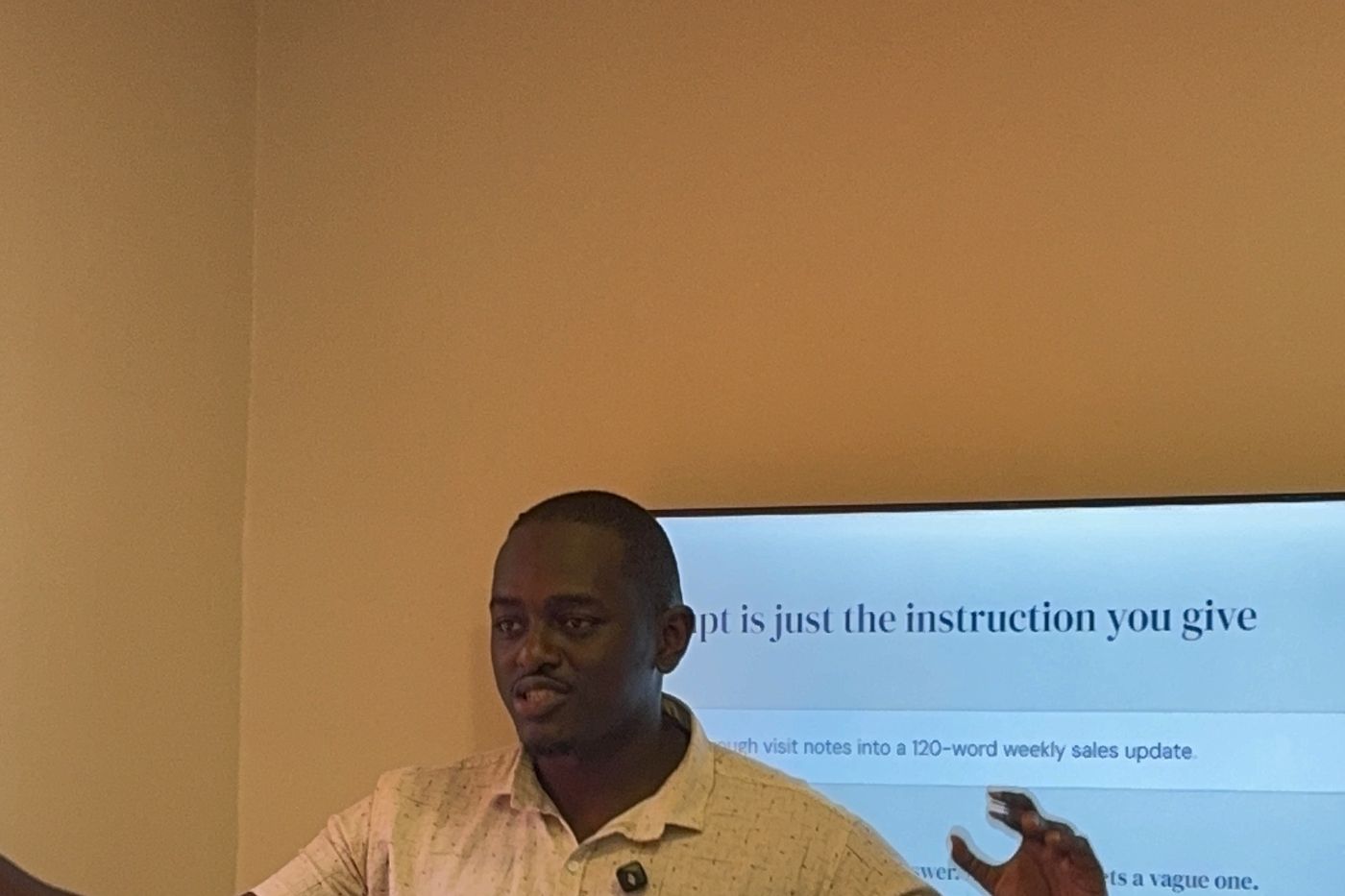
Rodney has run FuKazee's training since 2022 and still teaches inside every programme line: corporate sessions, the postgraduate cohort and the KCSE examiner webinars. First Class Honours in Journalism and Mass Communication, University of Nairobi.